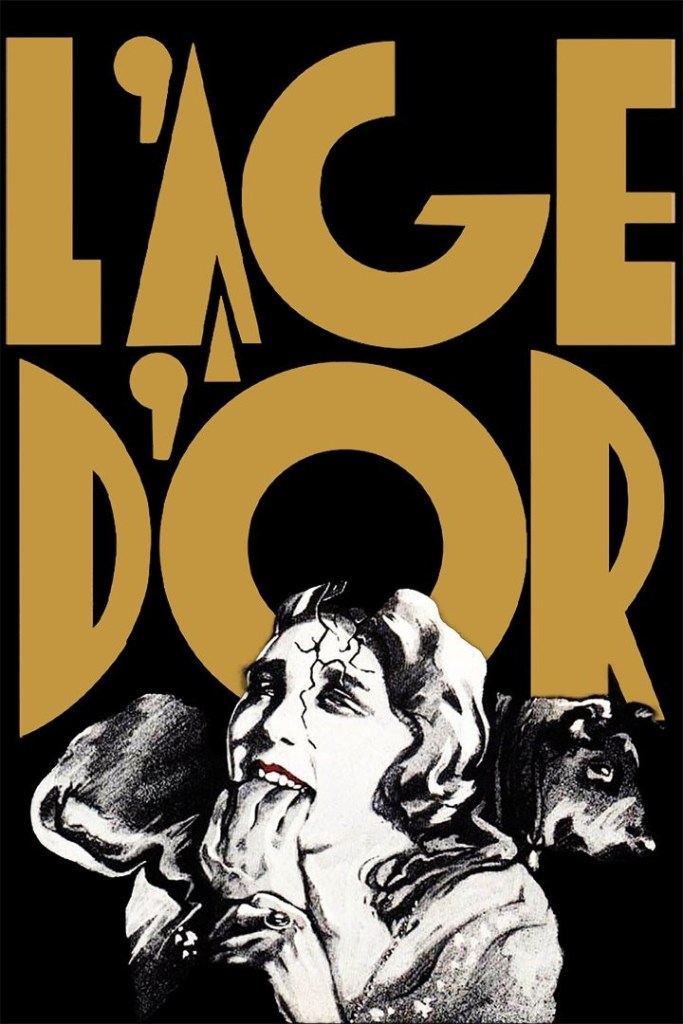
The film in question today is one I have always harboured a prejudiced disregard for, having been forced to suffer through it during both my time in college and now at University. Despite my somewhat admittedly unreasonable avoidance towards this film, it must be said that it is a masterpiece when considering surrealist cinema. It can easily be argued that this piece can be regarded as one of the key works of this movement. The film showcases the insanities of modern life through a fully satirical lens of the sexual desires of the bourgeois society and the values of the Catholic Church. Overall, this film is immensely ridiculous and fun to watch; understanding the deeper meanings presented by Bunuel is not essential for enjoyment, but it does make the film feel overall more interesting and engaging.
The historical significance of L’Age D’Or can be understood in many different ways from multiple angles. It can be understood as a landmark in surrealist cinema, a radical critique of bourgeois and religious authority, alongside an expression of the political and cultural unrest of interwar Europe. Bunuel directly tackles the crisis of bourgeois society through this film. Released shortly after the beginning of the Great Depression, it reflects the middle class’s growing dissatisfaction with society’s values and order at the time. Bunuel portrays these bourgeois ritualistic ceremonies and dinners as increasingly absurd and restrictive. A key example of this within the film is at one of the bourgeois events, where the working-class groundsman shoots and kills his own son while the upper classes, who are partying, look on without any real care. This critique that Bunuel presents resonated well with avant-garde artists who saw modern society as hypocritical. The film itself was created at the height of Surrealism, a movement led by Andre Breton.
Much like Bunuel’s earlier film Un Chien Andalou, L’Age d’Or rejects conventional narrative logic. Instead, it uses irrational imagery and disruptive scenes to attack accepted social values. A key example of this is the party sequence where the working class man shoots and kills his own son while the upper-class Bourgeois’ party on like nothing has occurred. Bunuel presents the bourgeois family as an institution that is a further obstacle to human desire and freedom. Additionally, as the primary goal within the film is for the two main characters to consummate their relationship, as time and time again the pair is blocked by members of the Catholic church alongside the bourgeois society. This is shown from the beginning of the film when the two attempting to consummate in the mud, they disturb the religious ceremony happening and the man is apprehended and led away by two men. This further allows Bunuel to portray the bourgeois ritualistic lifestyles as absurd and restrictive, the lovers at the centre of the film find their desires repeatedly frustrated and refused by social institutions and conventions.
This critique offered by Bunuel resonated well with avant-garde artists who saw modern society as hypocritical and spiritually empty. Overall, when the film first premiered in Paris in 1930, it provoked outrage from many right-wing groups, with many groups even going as far as disrupting screenings, vandalizing the cinema, and protesting what they saw as attacks on religion and morality. Eventually these controversies led French authorities to ban the film. It then remained largely unavailable for decades and became one of the most famous examples of cinematic censorship in the twentieth century.
My personal distain for this film may never be fully overturned, but I can admit that it is impossible to not recognise the importance this film holds, not only in its highly recognisable and iconic surreal imagery, but also in how it captured the class tensions of Europe between the wars. Bringing a fresh spotlight onto these issues and creating an argument for the appreciation and love for surrealist cinema all over.

 Ruby Reviews Films
Leave a comment