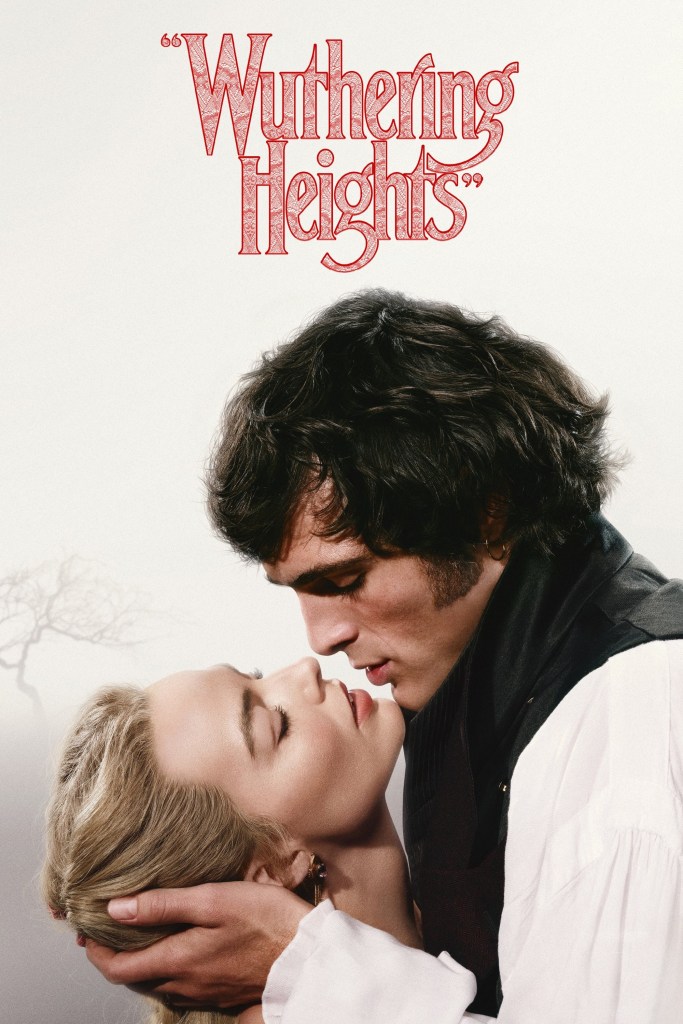
As far as adaptations go, it can easily be decided that this is not a successful one. Emerald Fennel is most well-known for her work on the 2023 black comedy thriller film Saltburn. The film is stylistically extremely twisted and dark, emphasising the unnatural and weird to create an uncomfortable effect for audiences. Considering this, it can be argued that Fennel can be viewed as an auteur, as the same dark and twisted style is carried over to her latest film, Wuthering Heights, which is another adaptation of Emily Brontë’s 1847 novel. There have been dozens of adaptations since its creation. Fennel’s style fits the book’s dark, unconventional romantic style; how she has chosen to adapt the story has been shown in the trailer, leading to mixed feedback from audiences.
The legacy of Wuthering Heights is iconic and is still immensely relevant in today’s culture; it refuses to behave like a “normal” classic. Its legacy isn’t just that it’s famous, but that it keeps unsettling readers and reshaping how audiences think about love, identity, and storytelling. Before this novel, romantic fiction often idealised love as noble or morally uplifting. Heathcliff and Catherine’s relationship is obsessive, destructive, and almost supernatural in intensity. That darker model of love echoes in modern stories, from gothic romances to psychologically complex films, where passion isn’t automatically healthy or redemptive. Furthermore, the narrative structure of the story is radically experimental. It is told through a series of layered narrators, primarily Mr Lockwood and Nelly Dean, creating a sense of distance and ambiguity. This unreliable, nested storytelling technique became a major tool in modern literature, influencing how authors play with perspective and truth. Truthfully, translating this complex story into yet another film adaptation, whilst knowing the dramatic style Fennel favours when directing, allows the film to tread a fine line between overdone, clunky, and dramatized and beautiful and subtle. Based on the trailer alone, the film is in for many mixed reviews, especially when considering the controversy of Heathcliff’s casting.
The importance of casting Heathcliff and Catherine is practically at the centre of the film, as, in the novel, it can be inferred that the character of Heathcliff is a person of colour. The reason this holds so much significance is that throughout the history of Wuthering Heights adaptations, there has been no actor of colour to play Heathcliff. Fennel has continued this tradition with her decision to cast Euphoria star Jacob Elordi as the anti-hero Heathcliff. When this casting was first announced, it caused a large controversy for audiences as fans realised the character was continuing to be whitewashed. When Fennel was asked and then criticised about her decision, she emphasised the fact that her adaptation was not a literal retelling of Emily Brontë’s novel, but instead a personal interpretation inspired by her own emotional response to the book. She argued that everyone who loves the novel has their own unique mental image of Heathcliff, and she chose to cast Elordi as he matched the description of Heathcliff as she remembered from the first time she read Wuthering Heights. Elordi has supported the approach Fennel has taken, describing the film as “Emerald’s vision” and highlighting the importance of fresh and original interpretations of classic works.
Additionally, the casting of Margot Robbie in the leading female role of Catherine “Cathy” Earnshaw further caused controversy for the film. When production for the film first began, Robbie joined the team as producer under her label LuckyChap Entertainment. She had produced two of Fennel’s previous works (Promising Young Woman (2020) and Saltburn (2023)). It was not until later in filming that Robbie went to Fennel and asked for the role of Catherine. Fans found difficulty accepting this version of Catherine with similar reasons they struggled to accept Elordi; they felt Robbie did not have the features that matched with the cultural interpretation of Cathy, Robbie’s blonde and polished Hollywood appearance seemingly being the complete opposite of Catherine’s unconventional and darker beauty. Alongside this, casting a globally famous Australian actress gives way to the argument that this risks losing the gritty, regional feel of the story, as Catherine is a 19th-century English character from rural Yorkshire. However, it must be remembered that these can be boiled down to viewer disappointment that this adaptation does not match up with their expectations, an attachment to earlier character portrayals, and concerns about authenticity and tone.
Having watched Fennel’s adaptation of this classic novel in the cinema, it can be said that, perhaps tonally, it is not the best thing to come out this year so far. There appears to be a large emphasis on continuing Fennel’s previous dark and sultry style that she deploys in Saltburn. Still, given the classical nature of the original manuscript, it can be argued that things are overdone. The sickening relationship Heathcliff takes up with Isabella Linton is part of the story that feels almost hilariously overdone; their relationship is abusive to its core. Heathcliff treats Isabella with cruelty, neglect, and emotional torment. Ultimately, there is no love in their relationship, only Heathcliff’s desire to wound and insult Mr Linton and Cathy. In the 2026 adaptation of this relationship, Fennel takes this abuse and cruelty to new levels when Nelly visits Heathcliff and Isabella at Wuthering Heights. She finds Isabella muzzled and chained to the table like an animal. The perverse nature of this showcases Fennel’s artistic style perfectly, but also asks the question of how far is too far? By showing what Isabella goes through and playing it up to its extremities, Fennel can effectively mock the trauma of abuse victims by making it, at its core, a seeming consensual sexual BDSM relationship. There is a further separation from the book as Isabella does not escape Heathcliff’s torment in the film; she seemingly accepts her fate, and that is the end of her story.
Overall, the concept of Fennel’s adaptation is admittedly a good one. However, her dedication to her signature style is what ultimately brings her to fall short of greatness. By focusing on the dark sexual nature of the book, there is a detraction from the other themes. Knowing Fennel does not see what she has made as a direct adaptation of the novel, but rather as a way to pay homage to how she read the book as a teen, allows her some leeway, but ultimately, she has not done the book or Emily Brontë justice with what she has made.

 Ruby Reviews Films
Leave a comment