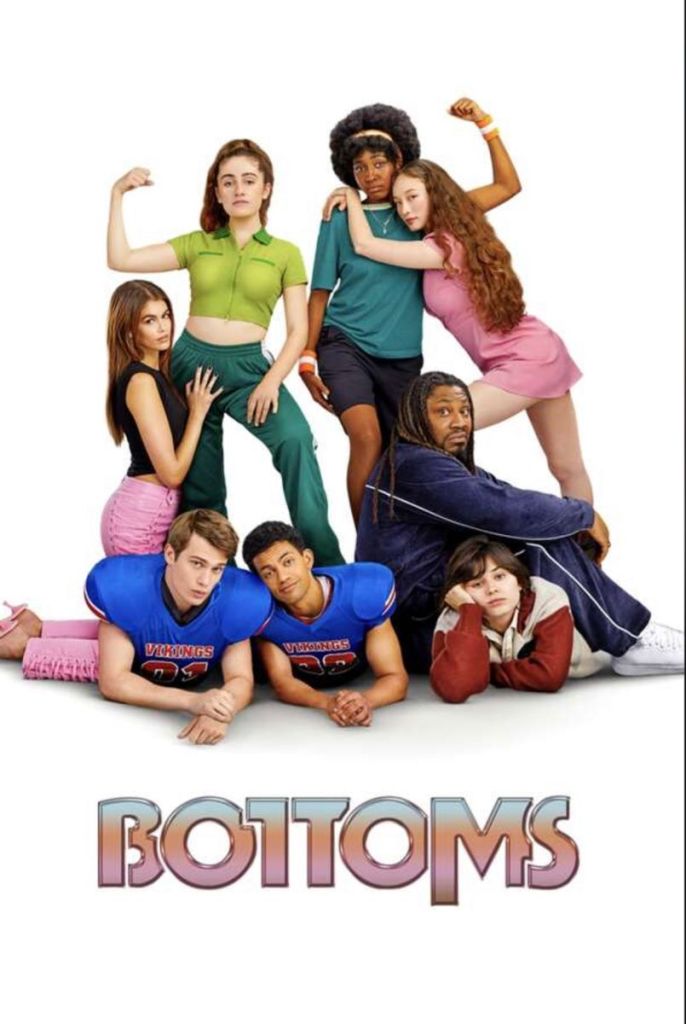
I’ve seen this film a fair few times and each time I’ve found it more and more enjoyable. Despite the initial difficulties Seligman faced during the process of pitching, shooting, and editing the film, these only add to the film’s charm and comedy. These blockages were unfortunately due to the film’s premise: the satirical black comedy follows two high school senior girls who start a fight club at school as a way to hook up with cheerleaders. Upon the release of the film, Bottoms received largely positive reviews from film critics, the queer storyline striking a chord with a large majority of Gen Z youth through the use of current popular artists in the soundtrack, allowing a sense of reliability within the film for many audiences.
Bottoms is a fun satirical film set in an American high school. Although the film is a satirical comedy, the themes of the film conform to those also showcased within earnest high school films. From the beginning of the film to the end, the film can exaggerate the high school social structures to the point of near absurdity. The popular students, such as Jeff (played by Nicholas Galitzine) are treated like celebrities, while outsiders are invisible. PJ and Josie’s desperation to be acknowledged as popular reflects how deeply status shapes teenage identity.
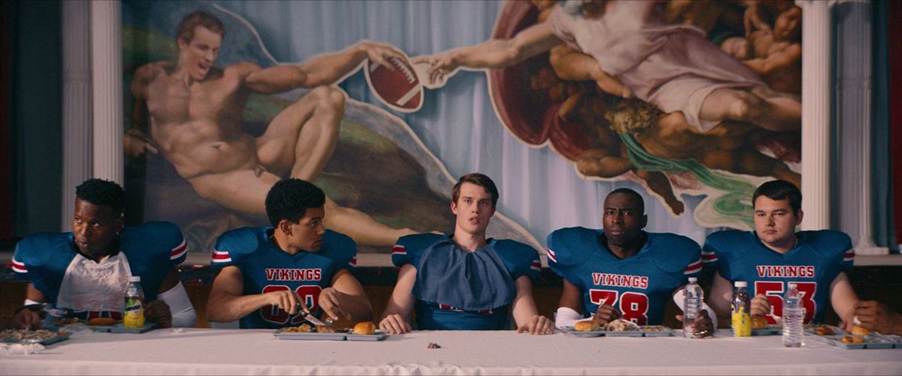
The image above comes from around the middle of the film; the most striking element within the still is the painting in the back of the setting, parodying The Creation of Adam by Michelangelo, by changing the divine touch to a football, it allows the quality of divinity to be swapped out and to be replaced by a deep appreciation of sports culture, elevating football to a near-religious status. Furthermore, the football team sits below this image, allowing them to appear visually “blessed” through this setup. By satirising the painting, the film can expose how high school sports are mythologised, especially in American culture. The players’ positioning reinforces R. W. Connell’s idea of hegemonic masculinity; the use of the football uniforms creates large bodies, reinforcing the sense of physical dominance typically associated with men. However, as Jeff looks slightly awkward and concerned, this subtly destabilises the hegemonic masculinity presented, hinting that masculinity is performed. Overall, this shot critiques the idolization of male athletes and the construction of masculinity as heroic and divine, alongside the way institutions, such as schools, reinforce these hierarchies. At the same time, the exaggerated style of the whole scene undercuts the seriousness of the scene, turning the reverence into ridicule.
This satirical teen film can see inspirations from the 1999 film Fight Club dir. By David Fincher, on the surface, it can seem like the two films are using the same gimmick, people starting underground fight clubs, but they are almost the complete opposite of each other in terms of tone, purpose, and meaning. The two films essentially follow the same structure but have completely different intents. In Fight Club, Disaffected adult men use and create the club as a reaction to capitalism, a masculinity crisis and identity loss. In Bottoms, the club is created as a means to hook up with cheerleaders. Structurally, both films use underground violence and a charismatic leader dynamic; Fight Club treats this as existential rebellion, while Bottoms treats it as absurd social climbing. The tone and genre further allow for further comparing and comparison between the two films, putting nihilism against absurd comedy. Fight Club is dark, philosophical, and nihilistic. However, Bottoms is chaotic, satirical, and intentionally ridiculous. Everything is exaggerated within Bottoms; it can be described as a surreal comedy. However, Fight Club is grounded within physiological realism, aiming to disturb rather than to amuse. The difference between the two films is that Fight Club wants you to question society, but Bottoms wants you to laugh at how stupid society already is. Overall, Bottoms isn’t just copying Fight Club; it’s responding to it, taking a story about men reclaiming identity through violence and transforming it into teen girls accidentally building identity through chaos.
Furthermore, the film conforms to the ideas put forward in queer cinema, tackling many different genres, allowing the queerness aspect to appear in many facets of the film. The main characters of the film are two, “ugly, untalented gays, please report to the principal’s office?” says the school principal via the intercom within the first few minutes of the film. The flipping of the stereotypical “perfect” main characters further leans into the queering aspect of the film. With the help of other characters, the female characters can run a successful fight club until a straight male character gets in the way. Overall, the movie sees itself as a satirical, fake, sexy comedy. It comes across as engaging, primarily through the careless violence and random plot twists. Coherence of the plot and social critique do not come across as concerns, as the film does not appear to care about greatness or high-level artistry. The primary engagement comes from defining American adolescence: high school, sex, mediocrity, and fun. The characters indulge in non-typically female rage, violence doesn’t hide a profound critique of female and LGBTQ+ stereotypes, but instead, Seligman can play with these stereotypes. Bottoms is a purely berserk film. Overall, cinema is tired of second-guessing itself. Younger generations of today want to be able to stand up for their communities and what they believe is right. In terms of this film, they desire the right to express themselves without having to change their identities into politically driven content. The film argues that queerness should not be groundbreaking, but instead part of the play, Bottoms can normalise the inclusion of queerness within global narratives, presenting an overall positive lens which can slowly make up for the years of media discrimination.

 Ruby Reviews Films
Leave a comment