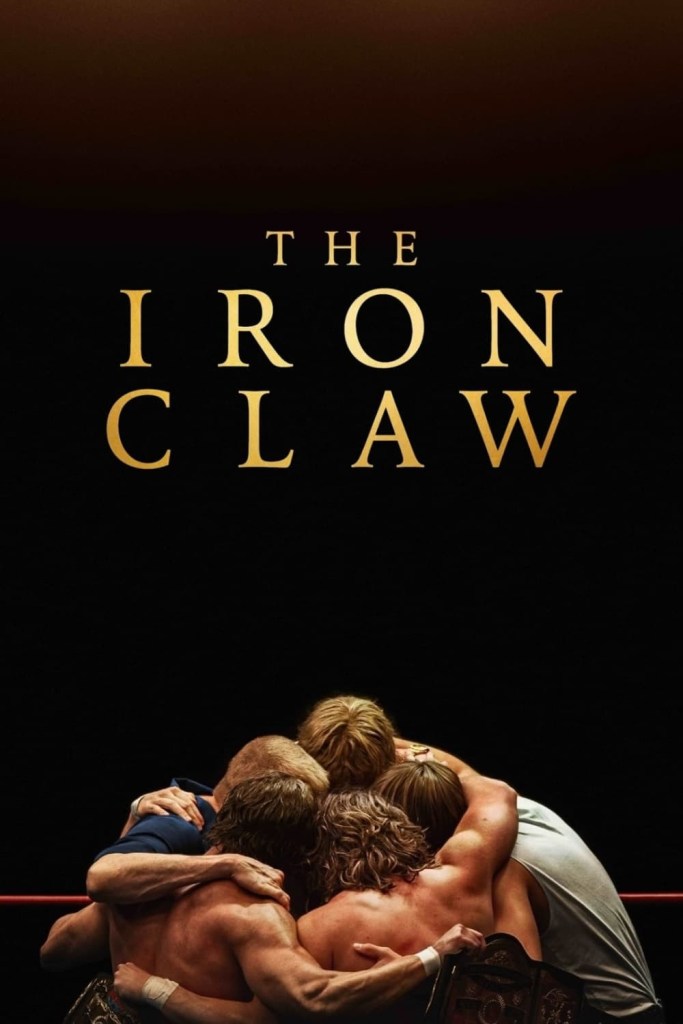
As the oldest sibling with three little brothers, I found this film easy to connect with and to enjoy. Going into this film, I wasn’t sure what to expect, as I’d never heard of the Von Erich family before or had much interest in wrestling. I hadn’t seen much of the actors’ work in other roles when going into this film, so I wasn’t entirely sure what to expect. However, overall, I found the film exceptionally moving and bittersweet. This film is one I would 100% recommend watching, either by yourself or with a sibling.
This film had a profound emotional impact on me. The many scenes where Kevin (played by Zac Efron) can be seen interacting with his brothers help create a deep and emotive connection to the film, as the film primarily centres around Kevin’s life within this period of his wrestling career, it can perhaps be argued that this allows the film to be more perfectly focused on the message that the actual Kevin Von Erich wanted to be portrayed in the film, one of survival and brothers. The scene where Kevin meets David in the toilets after his wedding is an example of this.
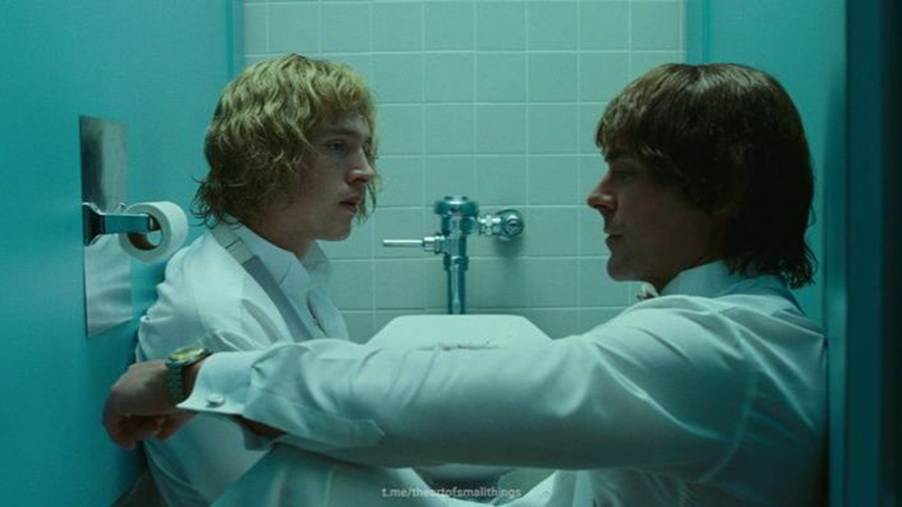
The muted, low-key lighting of the frame connotes a sense of misery and despair, as neither David (Harris Dickinson) or Kevin (Zac Efron) looks each other in the eyes (Argyle’s body codes), giving the impression that the brothers are perhaps lying to each other. This is later proven true, as although David states that he is fine in this scene, moments before Kevin finds him vomiting into the toilet. Additionally, Kevin’s own fears can be highlighted within his facial expression as it’s also revealed that his wife, Pam, is pregnant. Furthermore, through the use of framing within the shot half of both the actors faces are concealed, adding to the idea that each brother is concealing something from the other.
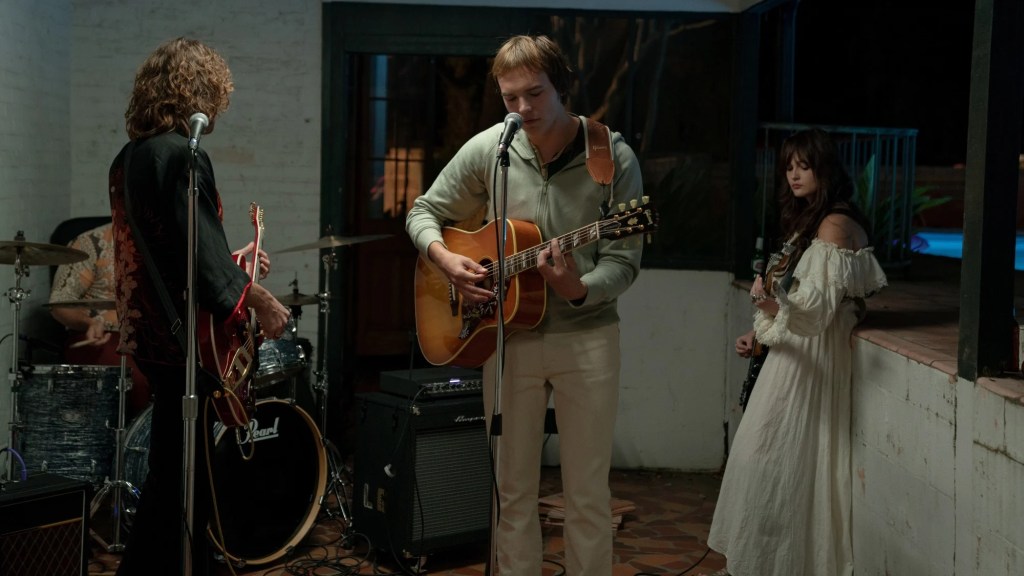
Although there is sometimes a clear secretive nature within the attitudes the brothers convey towards each other, it is undeniably clear that they care for each other immensely. As each brother struggles with the challenge of appeasing their glory-hungry father it can be seen they are each other’s support system. Durkin highlights this in the film when the three older brothers; Kevin, Kerry, and David help their younger brother Mike get out of the house to get to his gig. As their parents seemingly disagree with this pursuit, it can be assumed the support from his brothers is extremely important. In the picture above as Mike is placed in the centre of the frame it highlights him as the most important person within the current sequence, additionally, he is the only character fully facing towards the camera, as the people either side of him are angled slightly away. This deepens the idea that Mike is the most important person within the shot alongside connoting his deep love and passion for playing his music in his band. As his guitar is a light brown colour it is able to make a stark contrast against the rest of the scene and shows his true passion for playing with his band. The support Mike receives from his brothers can further be shown at the beginning of the film Kevin askes his mom to try and get his dad to ease up on Mike as he is the youngest and the smallest, therefore the least prepared for the wrestling ring. However, despite Kevin’s best attempts to keep his brother safe unfortunately Mike ends up in the ring and the results are devastating.
Despite the bittersweet family themes throughout this film this is undeniably a brutal and heart-breaking story at its core. The immense amount of pressure put on all four brothers can continuously be seen throughout the film. The need of Fritz Von Erich (played by Holt McCallany) to have his wrestling legacy continued and improved by his sons further highlights the immense pressure the boys are under. Fritz’s determination to uphold his wrestling legacy through any means necessary can be shown through this picture.
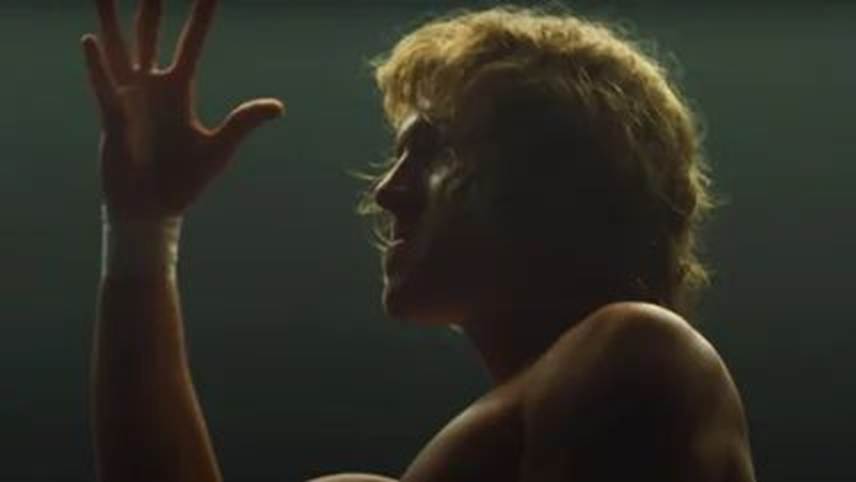
As David (played by Harris Dickinson) shows off the signature wrestling move of the Von Erich family (the iron claw) this highlights the continuation of the Von Erich wrestling lineage alongside suggesting the negative and toxic influence Fritz had on his sons childhoods. As the cast of the film is primarily male, and the sport it covers was majorly male dominated at this time, it makes sense that there appears to be a large part of the film that appeals to the ‘man box’ (Kivel) meaning under Fritz’s influence the boys are taught to appear ‘extra masculine’ and Efron portrays this idea of toxic masculinity at the end of the film when he’s shown with his two young sons. When he’s seen crying by his boys his immediate reaction is to apologise and state; ‘A man doesn’t cry.’ Showcasing the negative teaching enforced by his father. However, Durkin is able to create a reverse effect around the idea of the man box and strong masculinity as instantly Kevin’s sons tell him that it’s okay if he cries because, ‘everyone cries.’ The lack of judgement and clear love from his sons suggests a clear change in attitude for Kevtin. Therefore, helps make the end of the film appear immediately bittersweet and heartfelt, as although Kevin is now without his brothers he has love and support from his sons and wife.

 Ruby Reviews Films
Leave a comment