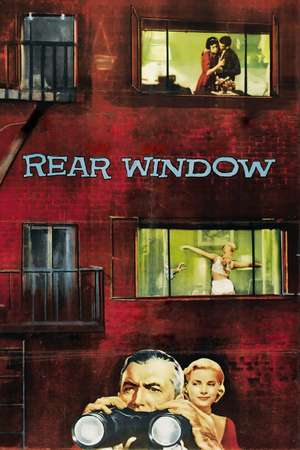
This is the second Hitchcock film I have ever watched, the first being his 1958 film Vertigo. Admittedly, I enjoyed this one far more than Vertigo, the thriller genre being one Hitchcock is most well-known for, and it is used very effectively throughout this film as the use of limited spaces and exploration of voyeurism creates a powerful sense of building tension across the entire film. Alongside this, James Stewart’s iconic portrayal of the main character, L.B. “Jeff” Jefferies, truly makes the film appear so notable. Stewart’s performance as Jefferies is so memorable as the blend of curiosity, scepticism, and obsession, alongside Stewart’s natural charm and the sense of ‘everyman’ that he brings to the film. As it is Stewart who is the one driving the narrative, his performance and transformation of Jefferies as he changes from a passive observer to an active investigator. This allows the narrative to be driven from complacent to suspenseful and tense.
A key moment within the film is the opening of the film, as the camera pans across the courtyard and gives the spectator an anticipatory glimpse into the world of the film. The use of the panning shot allows the spectator to view large proportions of the area, developing a deeper understanding of the world Hitchcock is trying to build. Considering the urban nature of the setup alongside the negative connotations surrounding urban areas of society, the spectator can perhaps begin to understand that something negative will take place here.
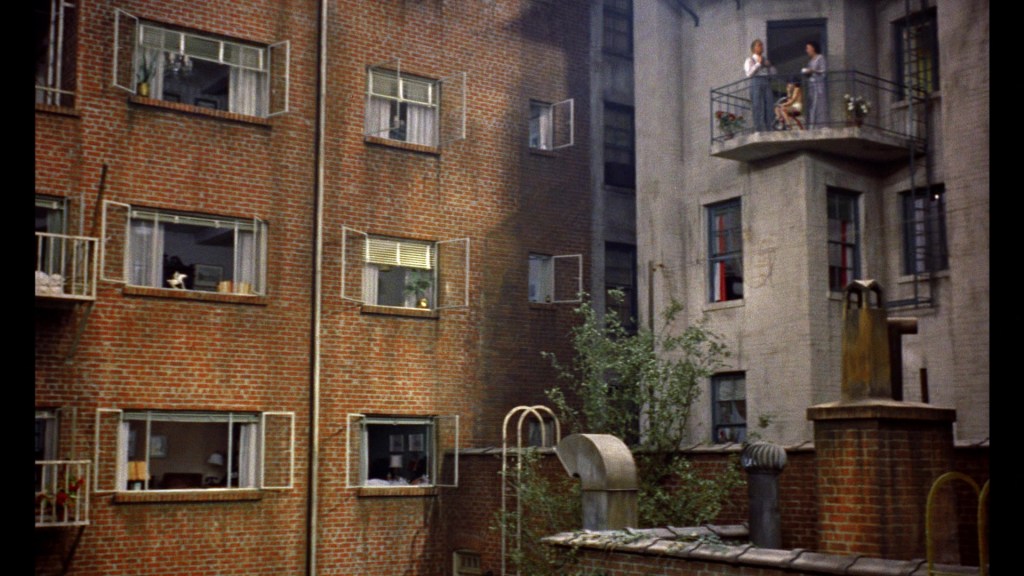
The large number of windows plays into the theme of voyeurism, which is made clear across the entire film. Additionally, as the camera pans left, moving throughout the set, it increases the sense of normality within the film. The normality of the setting now plays into the idea of binary oppositions (Strauss) later in the film, when darker plots have been uncovered, the setting appears less peaceful and more dramatic.
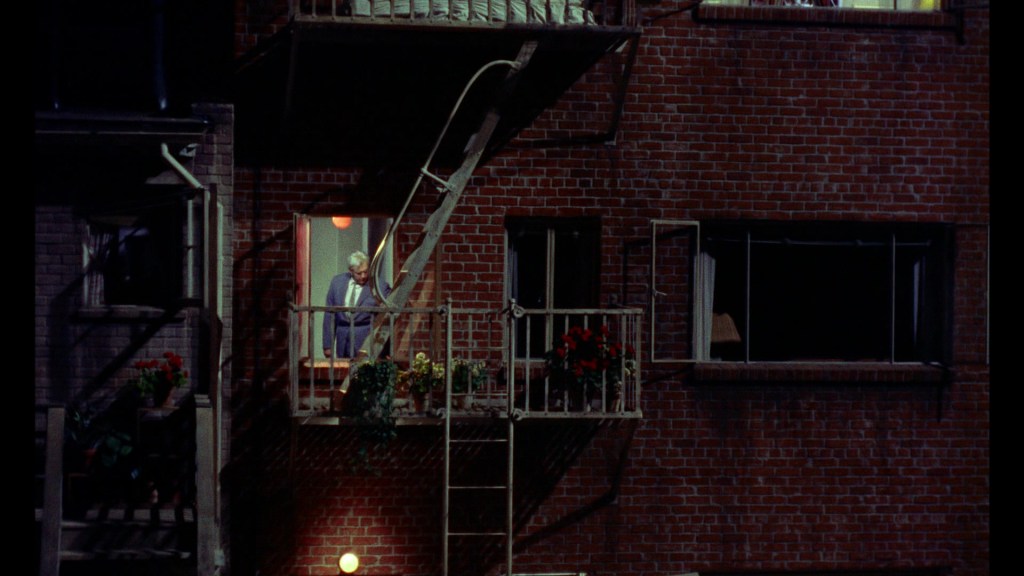
The use of low-key lighting within the shot creates a negative and climatic feeling that contrasts harshly with the first image. Hitchcock’s minimal use of lighting allows the antagonist Lars Thorwald (played by Raymond Burr) to be silhouetted, therefore, immediately drawing the spectator’s attention to the window. Alongside this, the yonic symbolism of the flowers outside the apartment further creates a sense of uneasiness as the spectator is currently unable to see the female protagonist Lisa Fremont (played by Grace Kelly), although she appears unharmed at the end of the film this sequence still promotes fear for the spectator as it is witnessed through the perspective of L.B. Jefferies (played by James Stuart) who has just expressed feelings towards Fremont.
Hitchcock’s use of point-of-view shots is masterful across this film, it aligns the audience with Jefferies and makes the spectator voyeurs just like him. The use of these shots plays a crucial role in building suspense, engaging the audience in the mystery, and immersing the spectator in Jefferies’ limited perspective.
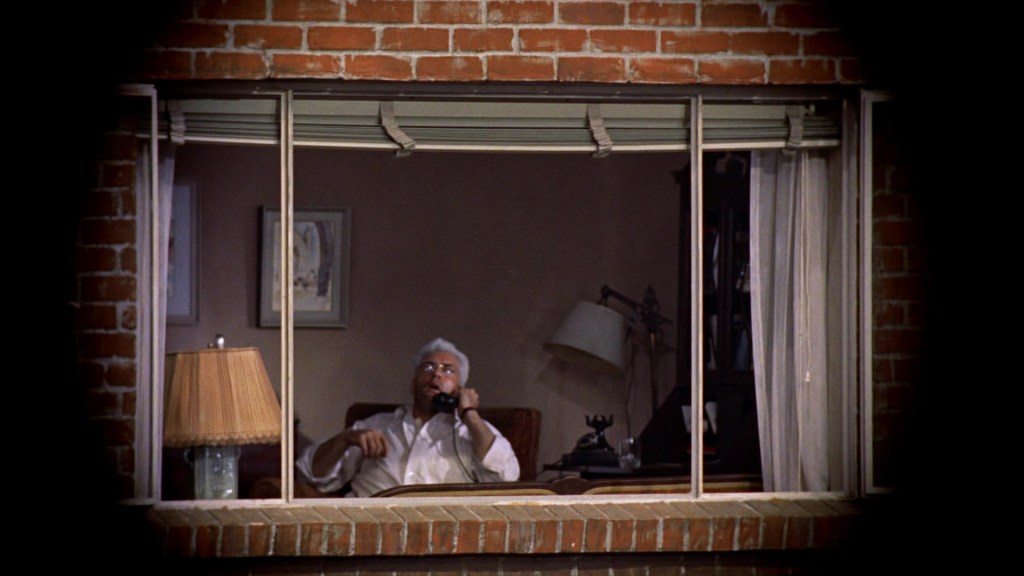
Jefferies’ limited perspective is highlighted here, the use of vignetting alerts the spectator that we are also looking through the lens of his camera/ binoculars, this engages the spectator as it allows us to take a voyeuristic pleasure from watching Thorwald, as he is unaware to what is happening. This allows the spectator to place a sense of entrapment in the sequence through Hitchcock’s use of a frame-within-a-frame. As the shot is unbalanced and doesn’t respect the rule of three, it makes the shot seem tense as the mystery further unravels, and it gradually reveals how messed up everything is. Hitchcock uses the POV shot throughout the film, and as Jefferies uncovers more about what is going on, the more on edge the shots make the spectator feel. This all comes to a climax towards the end of the film when Thorwald realises he is being watched.
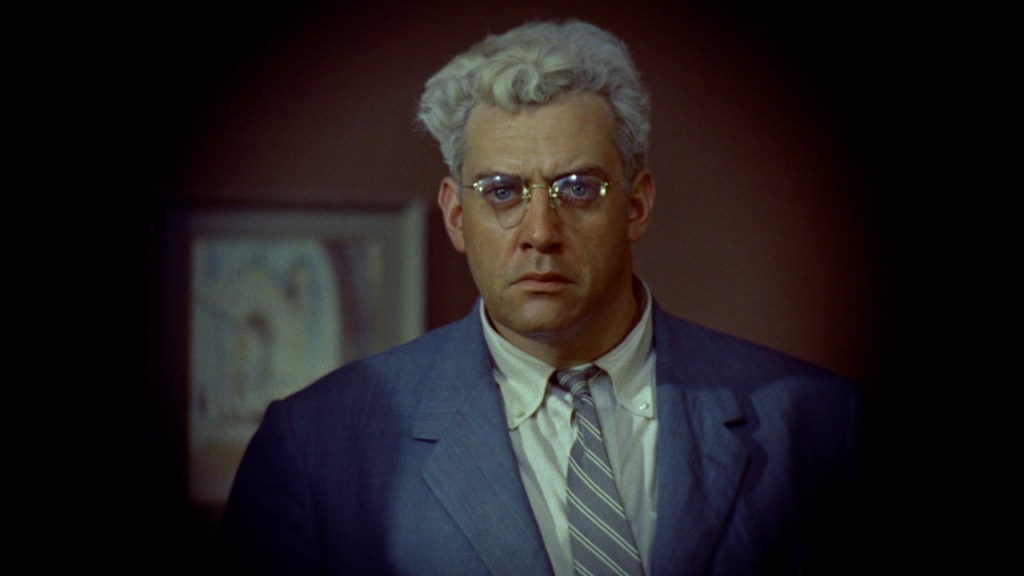
By looking straight down the camera, Burr effectively breaks the fourth wall and creates a sense of terror for the spectator as Jefferies’ plot has been discovered, and it’s clear he is now in danger. This dramatic reveal is expected as the film follows a linear restricted narrative, as the film follows Todrov’s Disequilibrium model, highlighting step four of the model as Jefferies is making attempts to return the narrative to a state of equilibrium. Later in the sequence, Thorwald comes to Jefferies’ apartment and attacks him, as Jefferies doesn’t attempt to run away, it places him in the constructs of the man box (Kivel) and works as a method of further villainising Thorwald as he has just beaten up someone with already serious injuries. This film is classic and incredibly iconic, Hitchcock’s masterful direction, including his use of camera movement, perspective, and editing to create tension, helps showcase Hitchcock as an auteur and make this film the masterpiece it truly is.

 Ruby Reviews Films
Leave a comment