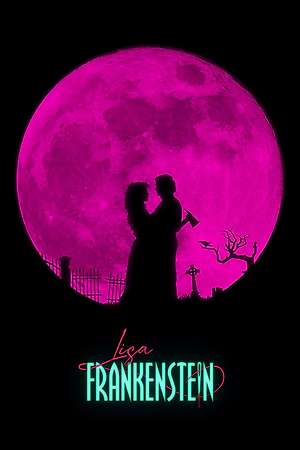
Loved this film!! I loved it so freaking much. The romantic comedy horror film is directed by Zelda Williams in her feature-length directorial debut, with a screenplay from Diablo Cody. The film stars Kathryn Newton as Lisa Swallows, a misunderstood teenager in 1989 who accidentally reanimates a Victorian-era corpse, portrayed by Cole Sprouse. As the pair navigate their unconventional relationship, they embark on a journey filled with dark humour and romance. This movie is an excellent blend of coming-of-age horror and comedy, playing with the classic Frankenstein tale in a fun and subversive way, Diablo Cody’s signature and witty dialogue and Zelda William’s unique visual style.
There are many iconic themes throughout this iconic film, mixing classic gothic horror with coming-of-age elements, making it both a fun and thematically rich experience. As Lisa doesn’t fit into the mould of a typical high school girl in 1989, the film can embrace the themes of outsider identity, self-expression, and rebelling against societal norms.
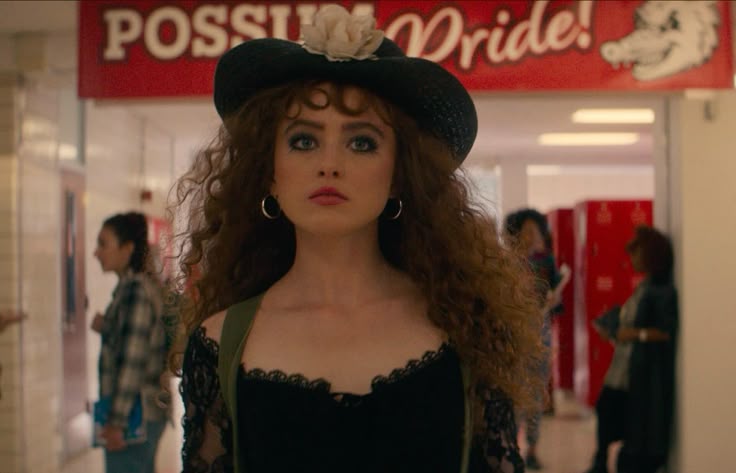
The use of framing positions Lisa (played by Kathryn Newton) in the centre shot, establishing her as the focal point, the shallow depth of field subtly blurs the background, emphasising her presence while still allowing the spectator to read into the context of the shot. High school students, the hallways, and teachers are all still visible this plays into Levi Strauss’ idea of binary oppositions as Lisa contrasts so strongly with the people behind her. The use of costuming further evokes a sense of differences through the gothic and vintage aesthetics. Her wild hair, bold makeup, and confident posture further ostracised Lisa from societal norms. The gothic horror-comedy themes of the film are reflected in Lisa’s visual contrast with her environment. The film was influenced by Edward Scissorhands and Heathers, the use of visual storytelling to highlight themes of nonconformity, self-identity, and dark romance. This sequence in the film can likely signify Lisa stepping into her power, a “heroine transformation” moment often seen in coming-of-age narratives.
Another iconic theme that is present throughout the film is the idea of feminine rage and revenge. As Lisa is dealing with personal trauma and mistreatment, when she takes control of her narrative, it allows her to blend the themes of horror and empowerment, echoing elements of revenge which can be found in gothic literature.
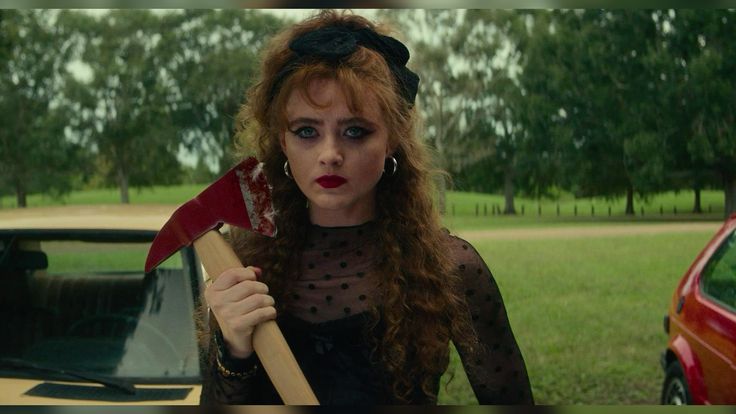
The use of medium close-up positions Lisa as slightly off-centre, encouraging the spectator to focus on her expression and the blood-stained axe she holds. The natural outdoor setting juxtaposes with her gothic appearance, enhancing the film’s dark humour and horror-comedy aesthetic. The slightly upward camera angle gives her a sense of power while also making her appear larger-than-life. The natural daylight provides soft lighting, contrasting with Lisa’s dark, dramatic look. The bright red of her lipstick and the blood on the axe stand out as striking visual elements, symbolising danger, passion, and violence. The green trees in the background create an ironic contrast, as the idyllic setting clashes with the implied gruesome act. Lisa appears both delicate and dangerous, embracing her dark side in a way that challenges traditional gender roles. This also highlights Lisa’s transformation from a misunderstood teen to someone with the confidence to wield an axe, hinting at a self-liberating and violent character arc.
Lisa Frankenstein features a diverse soundtrack that blends original compositions with classic tracks, enhancing its unique blend of horror, comedy, and 1980s nostalgia. The original score is composed by Isabella Summers, who is well known for her work with Florence + The Machine. Her compositions provide an atmospheric backdrop that complements the film’s tone. The soundtrack features an iconic cover of Johnny Nash’s “I Can See Clearly Now.” Performed by Isabella Summers and Elise McQueen. This iconic rendition offers a moody and atmospheric interpretation, aligning with the film’s gothic and darkly comedic tone. Another song which further complements the film’s blend of gothic, and 1980s aesthetic is “I’ll Call You Mine” by The Zombies, which provides a perfect backdrop for the tone of the film, fitting in perfectly with the visuals.
Another interesting factor in this film is the comparison that can be made to the 2009 film Jennifer’s Body. As the films share a common creative voice, Diablo Cody, who is known for her witty, darkly comedic dialogue, and feminist themes. While the films differ in execution, they explore similar ideas of female empowerment, transformation, and dark romance through horror-comedy. Both films take traditional horror troupes (the mad scientist, the succubus, the final girl) and transform them into female-driven narratives. In Jennifer’s Body, Jennifer becomes a man-eating monster, reclaiming her power after male violence. In Lisa Frankenstein, Lisa is not only a victim of circumstance, but she also actively reshapes her reality through her dark obsession. The film leans into gothic romance troupes, portraying Lisa’s relationship with her undead companion in a way that is both sweet and unsettling. Overall, Lisa Frankenstein is a fun twist on the coming-of-age genre, playing with the classic Frankenstein tale in a way that is fun and subversive, Diablo Cody’s signature witty dialogue and Zelda William’s unique visual style making this film truly iconic.

 Ruby Reviews Films
Leave a comment