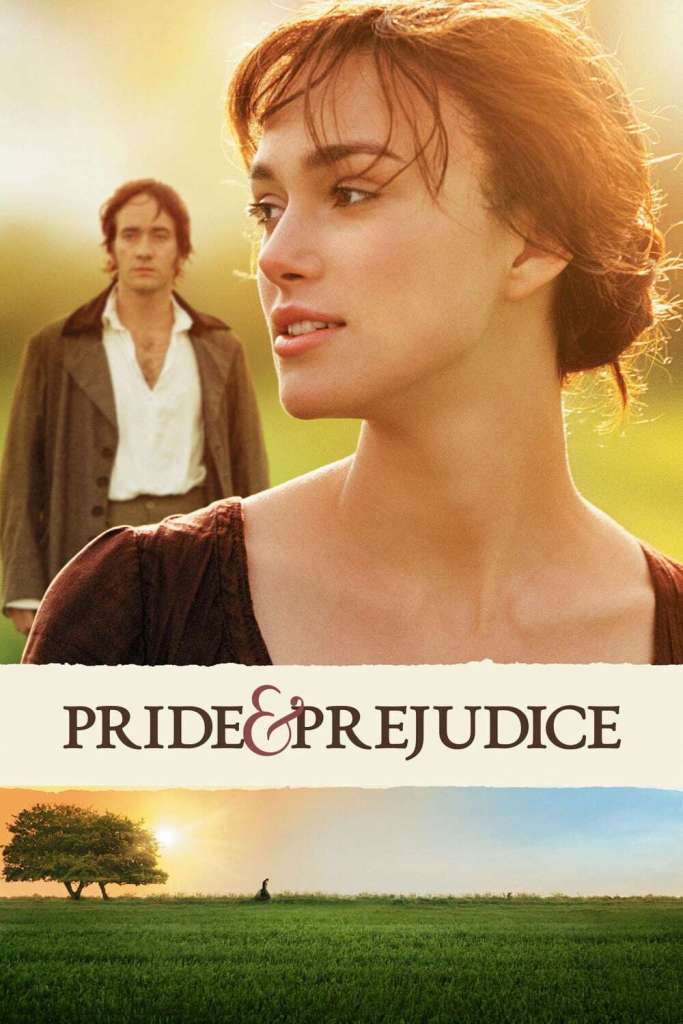
I love this film. I loved watching it so much. Admittedly, I only watched this film as I was bored and it was available on the BBC, but I’m so glad I decided too. The film is celebrated for the lush cinematography, emotional depth, and standout performances. The subtle use of body language to convey the deepening romantic relationship between Mr. Darcy and Elizabeth Bennet is truly one of the most beautiful things I have ever seen in a film. Additionally, the score (composed by Dario Marianelli) is absolutely stunning and is integral to the film’s tone, a couple of the songs from the score have made it onto my film score playlist.
This adaptation of Pride and Prejudice is packed full of iconic moments that have helped make it a fan-favourite film. Mr. Darcy’s first proposal in the rain is one of these iconic scenes as it is the height of romantic tension. Darcy is able to confess his love for Elizabeth but insults her family in the same breath. The passionate argument, the thunderstorm, and the proximity between them (despite their anger) makes this scene electric suggesting pathetic fallacy as the characters emotions reflect the stormy and powerful weather.
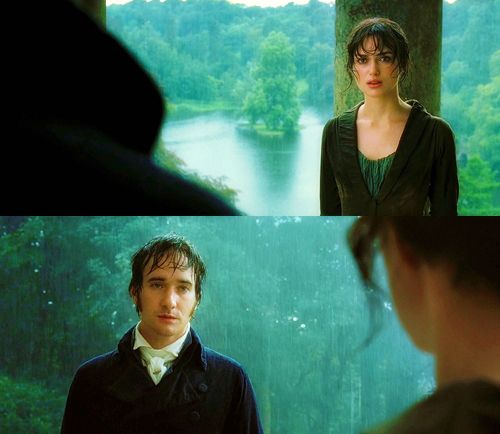
The heavy rain mirrors the emotional intensity and inner conflict of the characters. Rain often symbolizes renewal or cleansing in cinema, reflecting the pivotal moment in their relationship as truths are aired and emotions are exposed. The beautiful backdrop of nature with the expansive lake and stunning green scenery creates a sense of isolation, emphasizing the raw, private confrontation between Elizabeth and Darcy. It also contrasts their small human forms with the vastness of the world, highlighting the universalness of their emotions. The use of over-shoulder shots from each characters perspective creates a sense of alignment (Murray Smith) with Elizabeth. The spectator is inclined to align with her as the film is from her perspective and we know she dislikes Mr. Darcy and blames him for Mr. Wickham’s misfortune. However, considering Stuart Hall’s audience response theory, it can be assumed that spectators of this film are previous fans of the book therefore creating preferred readings as they already know how the story will turn out. The use of muted colour palette, using natural tones (greens, browns, and greys) to ground the scene in realism and give it an earthy and unpolished look, this suggests that Mr. Darcy and Elizabeth’s journey to falling in love is natural, unpolished, and simplistic. This sequence’s cinematography and visual elements work in harmony to heighten the emotional stakes of the narrative. It’s a quintessential example of how atmosphere and subtle visual storytelling amplify the depth of character interactions.
Another iconic scene from this film is only in the US version of the film when Elizabeth and Darcy share sweet words on a moonlit terrace. While this isn’t universally included, it remains a soft and satisfying conclusion for many fans. Admittedly, when I first watched the film I was very confused when this scene wasn’t included, but I’ve seen the alternate ending many times on YouTube now.
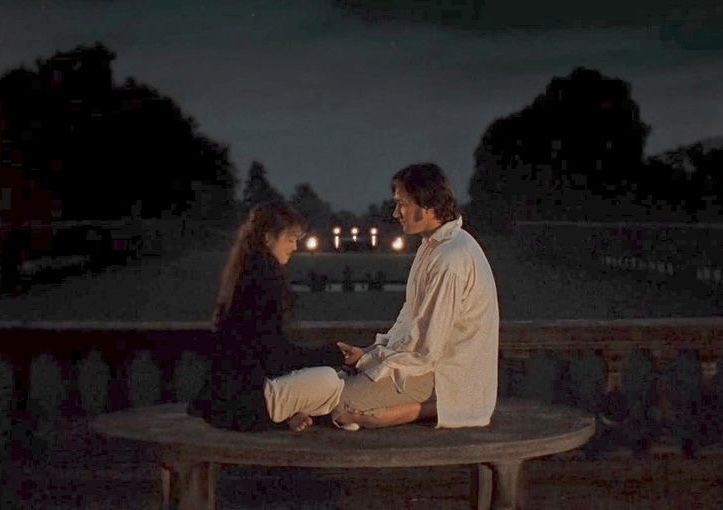
The choice of nighttime setting introduces intimacy and quietness, the dim lighting and open air create a private and reflective atmosphere, as if the world has fallen away, leaving only Elizabeth and Darcy together in their bubble of love and contentment. The backdrop of blurred trees and symmetrical rows of lights fading into the distance creates depth, drawing the spectators attention towards the central figures. The use of symmetry mirrors the balance and unity formed between the characters. Wright’s decision to use subdued colours on the character’s clothing and in the environment evokes calmness and vulnerability. The scene avoids vibrant colours, focusing instead on the interplay of light and shadow. Through the use of lowkey lighting there is a romantic undertone added to the film, symbolizing the warmth and connection between the characters. The composition and framing of the sequence further introduce the idea of love, as the two sit opposite one another on the circular table, this suggests equality and mutual vulnerability. Using the round table is symbolic as it is reminiscent of King Arthur’s round table, and how all who sat on it were equal despite of status. The intimacy and vulnerability of the sequence helps capture a rare moment of emotional honesty between the characters. The informal setting and casual poses break down the social constraints that would typically define their interactions.
The score for Pride and Prejudice, composed by Dario Marianelli, is widely praised for its emotional depth and how well it complements the themes and mood of the film. The music is a mixture of classical and folk elements, with distinctive piano and strings presence that enhances the film’s romantic and dramatic moments. One of the score’s most memorable tracks was Dawn the opening track, featuring a piano melody which beautifully sets the tone for the film. The music is able to mirror the serene, early morning landscape of the English countryside, where much of the story unfolds. The track helps establish the quiet elegance of the film, with the delicate and emotional quality this is added to by the visuals of Elizabeth Bennet (played by Keira Knightly) walking through the countryside. This piece is often seen as one of the most memorable moments in the film’s score and it serves as a perfect introduction to the themes of love, nature, and self-discovery which are all central to the film.
Another standout track from the Pride and Prejudice soundtrack is Your Hands Are Cold this is a delicate and intimate piece that plays during one of the film’s most emotionally charged scenes, where Mr. Darcy (played by Matthew Macfadyen) and Elizabeth Bennet have their first real connection, although it’s still a subtle and somewhat tense moment. The music plays when Darcy and Elizabeth briefly touch hands while dancing at the Netherland ball, and the score underscores the growing tension and attraction between them. The track itself is soft and poignant, featuring a combination of strings and piano, creating a moment that feels personal and fragile. The title, Your Hands Are Cold represents the literal touch between them, but also captures the emotional distance between the characters as at this point in the film, as they currently don’t understand or acknowledge the depth of their feelings for each other. The delicate nature of the music complements the reserved and complex emotions the characters are experiencing. Ultimately, the score has a certain intimacy to it, capturing the characters’ emotions and the sweeping beauty of the English countryside, and it perfectly complements the film’s adaptation of Jane Austen’s classic novel.

 Ruby Reviews Films
Leave a comment