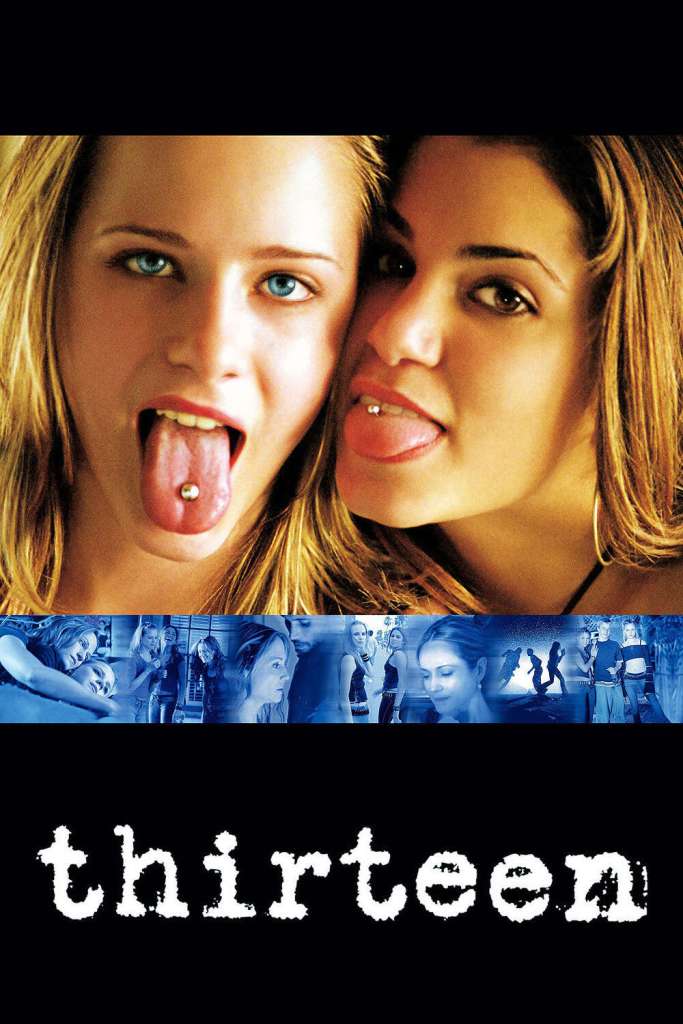
I found this film incredibly engaging, although a little bit terrifying. It made me think a lot about my little brothers and my experiences as a thirteen-year-old girl. I watched this film by myself, and I’m quite glad about that, as I don’t think either of my parents would react anywhere near positively. The American drama film is directed by Catherine Hardwicke and co-written by Hardwicke and Nikki Reed, who also stars in it alongside Evan Rachel Wood. The film is about Tracy, a clever and promising student, as she becomes friends with rebellious Evie Zamora. Under Evie’s influence, Tracy starts partaking in risky behaviour, including substance abuse, shoplifting and sexual activity. As Tracy’s behaviour begins to spiral out of control, her relationship with her mother becomes increasingly strained. The film poignantly depicts the challenges of adolescence and the impact of peer pressure on young teens.
The lighting throughout the film plays a crucial role in enhancing the film’s gritty realism and emotional intensity. Catherine Hardwicke’s background in production design uses lighting as a storytelling tool to reflect the inner turmoil and transformation of the characters. As Tracy’s behaviour becomes more reckless and her emotional state becomes more turbulent, the lighting shifts to darker, with more shadowed compositions. The use of contrast lighting emphasises the duality of her life.
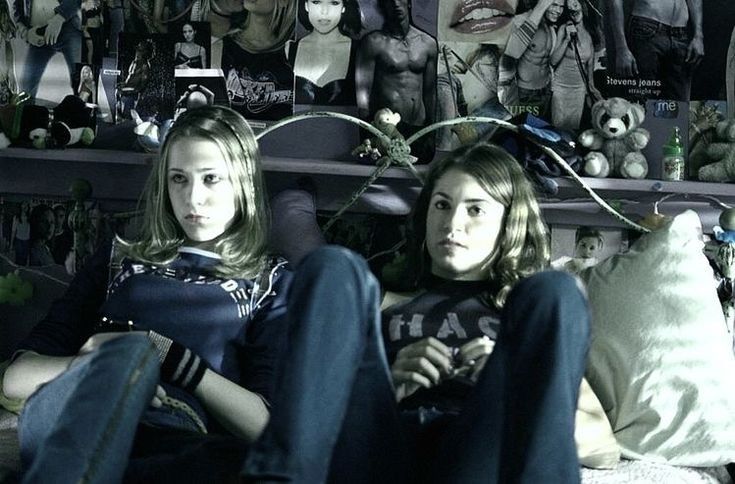
The low-key lighting in the picture above casts soft shadows and creates a dim, subdued atmosphere. This emphasises a sombre and introspective mood, aligning with the darker themes of the film such as identity crisis. The light is angled in a way to focus on the character’s faces, drawing the spectator’s attention to their expressions. The rest of the room appears to be in shadow, adding to the intimacy and isolation of the moment. Overall, the image has an incredibly desaturated colour palette, with muted blues and greys dominating the frame. This colour scheme contributes to the film’s overall aesthetic of realism and enhances the melancholic tone of the scene. The cool colours reflect the emotional distance and internal struggles of the characters. Additionally, the tight framing of the two characters places them at the centre of the spectator’s focus, emphasising their relationship and shared experiences. The framing also creates a sense of confinement, which could potentially represent the challenges of peer pressure and the challenges adolescence has on young teens.
The use of warm tones within the film provides a much-needed contrast to the film’s desaturated sober mood. The warmer tones depict family moments or connections, perhaps strained, but they create a sense of nostalgia or longing for stability and warmth in Tracy’s life.
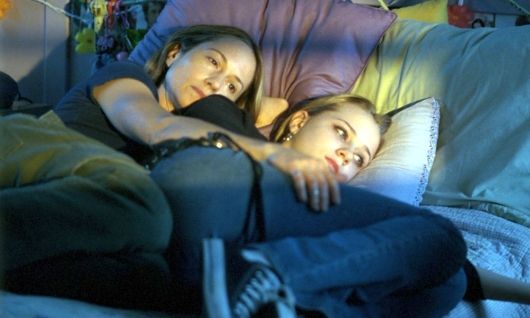
In the picture above, the use of the rising sun creates warm tones but also suggests that this is a new start for Tracy. As the light is gently illuminating Tracy’s face it helps draw attention to her emotional state, reinstating her sadness at Evie’s betrayal. The Subtle warmth in the background and on Melanie’s face, suggests the underlying presence of care and love which is steadily getting rid of the cold emotional landscape which used to be Tracy’s life. The subtle warmth contrasts with the cool overtone, implying a glimmer of hope. The physical closeness of Melanie and Tracy in comparison to their emotional distance is a visual representation of one of the film’s central themes, the gap between parents and their adolescent children. Melanie’s embrace signifies her love and concern for Tracy, while Tracy’s distant expression reflects her inner conflict.
Thirteen is a powerful exploration of adolescence, identity, and familial relationships. The film is notable for its raw, unflinching portrayal of the struggles faced by teenagers, particularly young girls as they navigate the complex transition from childhood to adulthood. Overarchingly, this is a coming-of-age film, highlighting Tracy’s journey from being a bright, innocent young girl to a troubled teenager. The film illustrates the rapid and often turbulent loss of innocence that can accompany the transition from childhood to adolescence, as Tracy becomes exposed to the darker aspects of life. This transition is marked by Tracy’s desire to be accepted by her peers, particularly Evie, this drives her to engage in behaviours which are far beyond her years.
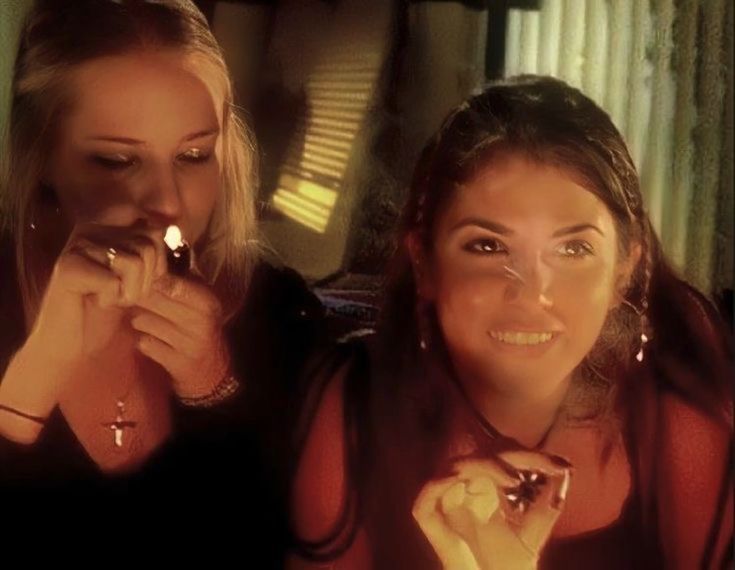
The dominant use of warm tones in this sequence, particularly orange and red hues, suggests a sense of intensity and heat. The chosen colours often evoke passion, danger, and impulsivity, this aligns with Tracy’s actions throughout the film but can be especially highlighted here as she is smoking. The darker background and clothing create a stark contrast with the lighting, creating a significant contrast between the two this creates tension between the two which is a central theme throughout the film. Evie’s expression suggests a thrill or enjoyment of the moment, implying that she is comfortable in the space and is excited by the rebellious act. However, Tracy contrasts this as she is much more focused on lighting her cigarette, indicating she lacks experience in the task and is new to this world of rebellion.
The film also explores the dynamics of a dysfunctional family, with Melanie’s struggles as a single mother being one of the leading factors within the theme. Tracy’s estranged relationship with her father, and the presence of Melanie’s seemingly on-and-off boyfriend all contribute to Tracy’s feelings of instability and neglect. The film portrays how family issues can exacerbate adolescent struggles and how a lack of communication and understanding within the family unit can lead to further disconnection and conflict.
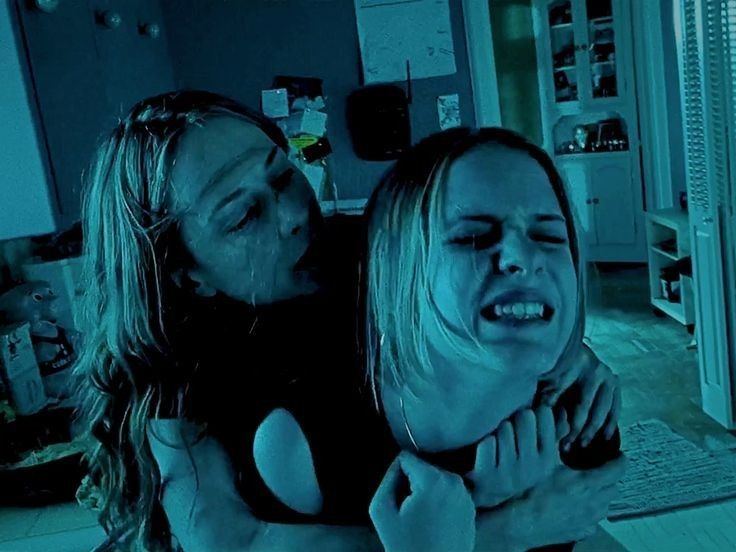
The conflict between Tracy and her mother is a constant theme throughout the film, but when Melanie finds out about what’s going on between Evie and Tracy is when the conflict between the two characters peaks as Tracy is now no longer able to hide from her mother. This sequence is completely lit with low-key lighting accompanied by blue lighting helps convey Tracy’s misery and fragile emotional state. Additionally, the proximity of the two characters helps convey the conflict between the two. As Tracy is trying to escape her mother it communicates the mistrust between the two characters, displaying the negative effect Evie has had on Tracy and her family. Thirteen received critical acclaim for its raw and realistic portrayal of teenage rebellion and the pressures faced by young girls. The performances of Evan Rachel Wood and Holly Hunter were particularly praised, with Hunter earning an Academy Award nomination for Best Supporting Actress. The film’s gritty and authentic style, along with its unflinching look at the darker side of teenage life, made it a standout in the early 2000s independent cinema.

 Ruby Reviews Films
Leave a comment