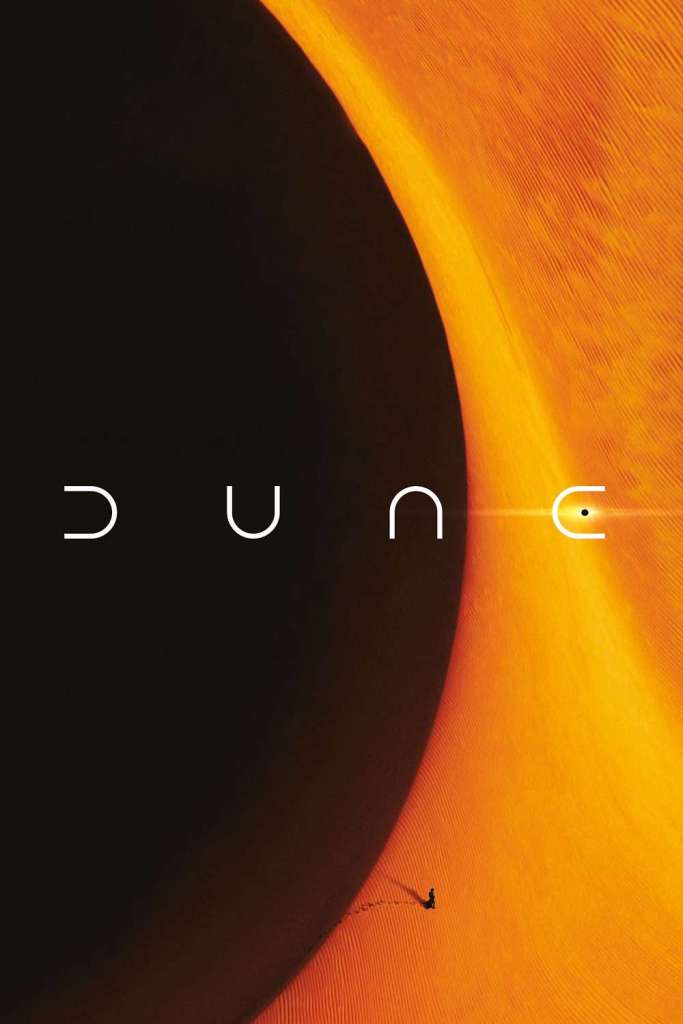
Visually this film is stunning, the epic science fiction film beautifully captures the vast scale and complexity of the written world it is based on (Frank Herbert’s 1965 novel of the same name). Although this film was hugely successful at the box office with a $165 million budget, and it shows! The film was the winner of the 2022 Oscar for Best Achievement in Visual Effects. Yes, this film is beautiful, but I found it boring. With a runtime of just over two hours, I felt for such a film that had been hyped up so much it was just quite dull. Albeit I only chose to watch this film with the upcoming release of Dune: Part Two coming ever closer, and I am not a huge fan of the books (having never read them). Overall, I thought the film went on for too long with too little occurring.
The visual effects of Dune (2021) are stunning, with many impressive insert shots within the desert adding to the stunning warm orange and yellow aesthetic of the film.

This showcases the rule of thirds as the three sandworms split the screen perfectly into three parts, this creates a sense of visual symmetry and ensures the audience’s eyes are immediately drawn to the sandworms. Furthermore, the use of the tanned yellow colouring creates a sense of irony as the colour connotes a sense of stability while the actions of the sandworms have the opposite effect. The film’s visual effects were spearheaded by the amazing VFX supervisor Dominic Tuohy and the DNEG (Double Negative) team, a renowned visual effects company. Overall, the film’s striking visuals are a crucial part of its success, helping ground the film’s science fiction setting tangibly. One of the most iconic visual elements in the film is the humongous sandworms. The massive creatures (pictured above) are integral to the spice mining process, which was created through the use of cutting-edge CGI. Through a combination of digital animation and practical effects (such as miniature models) to achieve realistic movement and interaction with its surroundings. Moreover, the visuals of Arrakis help further transport audiences into the fictional/dystopian universe. The mixture of practical effects (large sets, actual filming locations, and miniatures) and CGI help create the massive desert dunes, large-scale architecture, and futuristic spaceships. An example of large-scale and high-quality architecture is Paul’s bedroom on Arrakis.
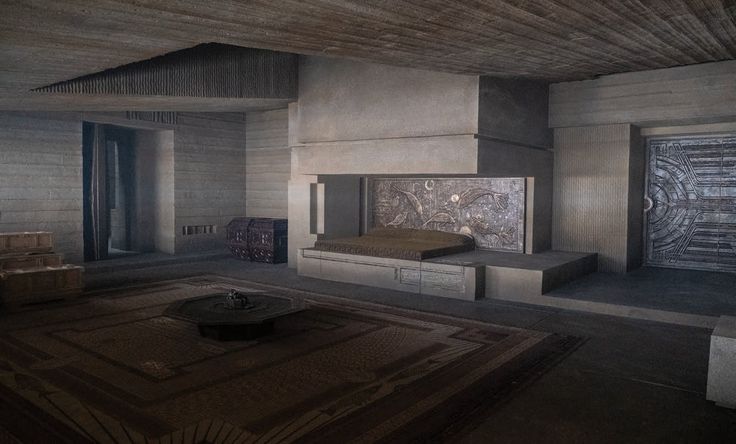
The simplistic and minimalistic look of the bedroom reflects the aesthetic that is characteristic of the Atreides’ style, alongside the harsh and arid environment of the desert planet. The room is sparsely furnished with few personal items or decorations. This ties in with the ethos of the Atreides family, valuing discipline and practicality. The use of harsh KiKi-like shapes (Ramachandran and Hubbard) creates an unfriendly feeling towards the room, it feels highly unwelcoming, adding to the unwelcoming feeling is the sterile grey palette that is throughout the room, creating a hospital-like feel.
The film explores a variety of complex themes, many of which are deeply rooted in Frank Herbert’s original novel and fit perfectly into the category of science fiction. Dune delves deep into the intricate power struggle between noble houses, the Emperor and other factions (much like the Hunger Games). However, at the heart of the story is House of Atreide’s shift in control over the desert planet Arrakis, which is the only source of the valuable spice, melange. The political intrigue, betrayal, and manipulation reflects how power is wielded, and the lengths people will go to maintain or seize power.
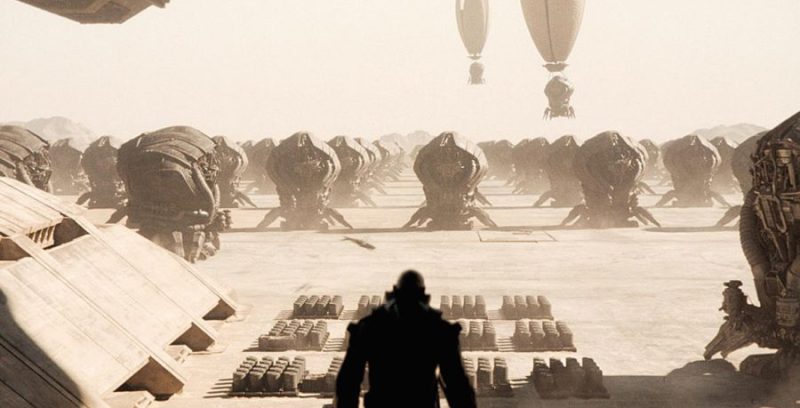
This highlights the highly significant theme following the struggle for power and the desire for control over the spice. The symmetrical setting of the battlefield reflects the harsh environment of the planet alongside the brutalist nature of Arraknis.
Another important theme within Dune is the harsh, unforgiving environment, which is key to the narrative, due to the abundance of spice it has to offer. The film addresses ecological change and environmental stewardship, especially through the Freman, the people native to the planet who have adapted to the desert. Their belief in transforming Arraknis into a more hospitable place reflects concerns about terraforming and humanity’s impact on nature, this theme has steadily become more relevant in real-world discussions on climate change and environmental conservation. Overall, Dune: Part One is a visually stunning film full of rich themes that are relevant to today’s environmental situation that is slowly deteriorating. Admittedly, I fell asleep in the middle of this film, this can perhaps explain my dislike towards this film.

 Ruby Reviews Films
Leave a comment