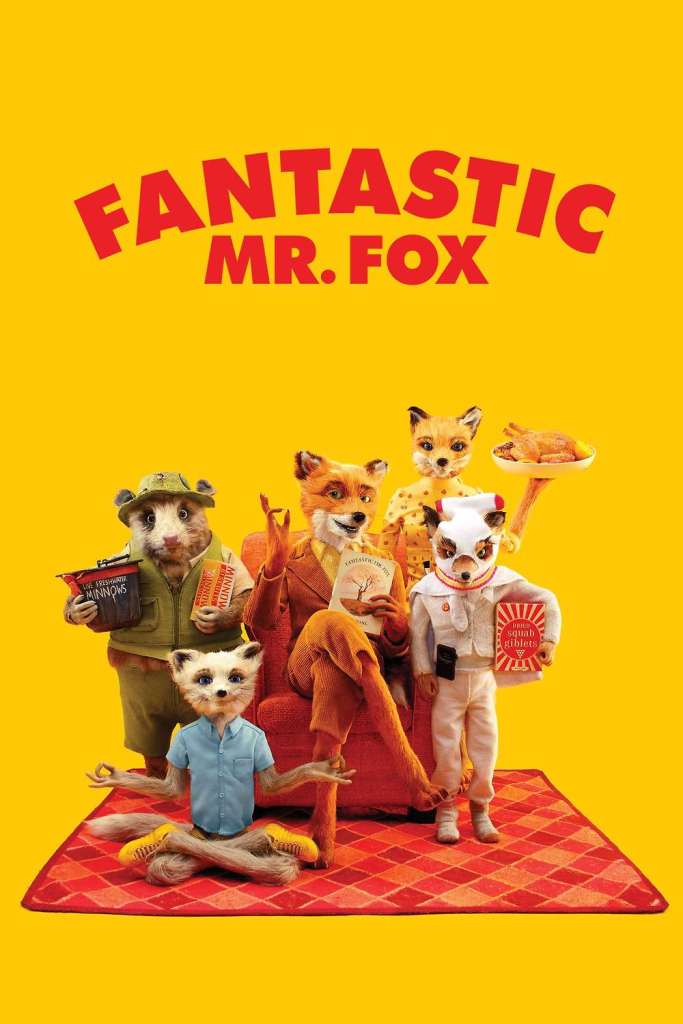
This film is a staple when considering Wes Anderson’s career as an auteur! The use of warm, deep, comforting colours like yellow and red adds to the beauty of the film, creating the iconic autumnal style that is key to its aesthetic. Paired with the unique choice of stop-motion, it adds to Anderson’s eccentric but whimsical construction of his signature style. The film is based on the 1970 Roald Dahl children’s novel of the same name. The film is chock full of humour and wit, part of Anderson’s trademark style. The dialogue is sharp, and many moments of visual humour help emphasise the animal characters’ quirkiness.
The use of stop-motion animation in Fantastic Mr. Fox is extremely detailed, with every scene being crafted by hand. From the interior of the fox family’s tree house to the sprawling countryside, the sets are rich in texture with an earthy rustic feel. The use of incredibly intricate details creates a sense of realism, contrasting significantly with the anthropomorphic animals, adding to the film’s unique charm. All the characters, particularly Mr. Fox, showcase a wide range of emotions, which are skilfully conveyed through a wide range of subtle facial expressions.

The animators used puppets with movable facial features (eyebrows and mouth) to create intricate expressions, allowing for impressive depth of character. The animators also worked closely with experts to ensure that the animal movements, like walking, running, and climbing all felt authentic. The foxes, badgers, and other animals move with a certain fluidity and grace, which is rare in stop-motion as movement can often feel stilted.
The integration of visual effects is minuscule within the film but still used to enhance certain scenes, such as explosions, smoke, and water. These effects were integrated seamlessly within the stop-motion animation, blending the hand-crafted world of the characters with the dynamic action scenes. The use of stop-motion was decided by Anderson and his team to maintain a tactile, organic feel. The use of this method allowed Anderson to avoid the “perfect” look of computer-generated animation and instead create a world that felt more real, grounded and tangible. The imperfections within the stop-motion, such as minuscule shifts in the character’s position from frame to frame add to the film’s handmade, charming aesthetic.
The bright, vibrant, and whimsical colour palette of the film plays a significant role in establishing the film’s unique aesthetic, contributing to the warm and earthy atmosphere. The colour choices reflect the natural world beautifully while enhancing the quirky, handcrafted feel of the stop-motion animation. Mr. Fox’s iconic orange fur dominates the majority of the colour palette, these shades tie the characters directly to the environment, creating a sense of alignment (Murray) between nature, the animals and the audience. Overall, the palette evokes a feeling of autumn, a season associated with the idea of change.
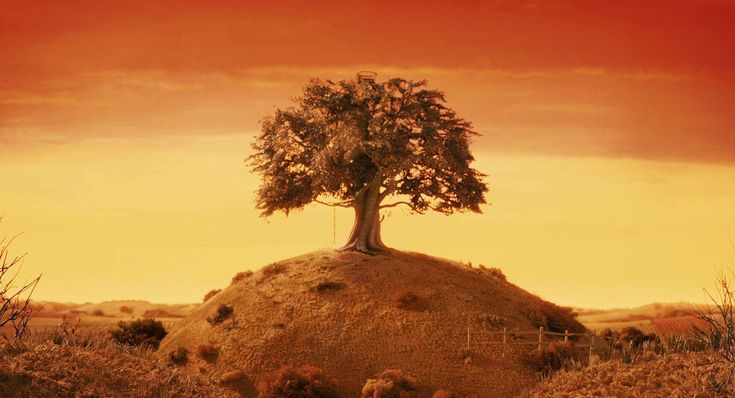
The use of rich browns, oranges, yellows, and reds creates a visually stunning nostalgic, retro atmosphere, the effect of this enhances the film’s connection to childhood and the idea of classical storytelling.
The juxtaposition between the animal and human worlds adds further depth to the classic Wes Anderson feel of the film. The natural world, where the animals live and interact, is filled with warm, earthy tones. The colour palette is inviting, cosy, and full of organic textures. On the other hand, the human world is muted and industrial. Shown through brown and blackish colouring.
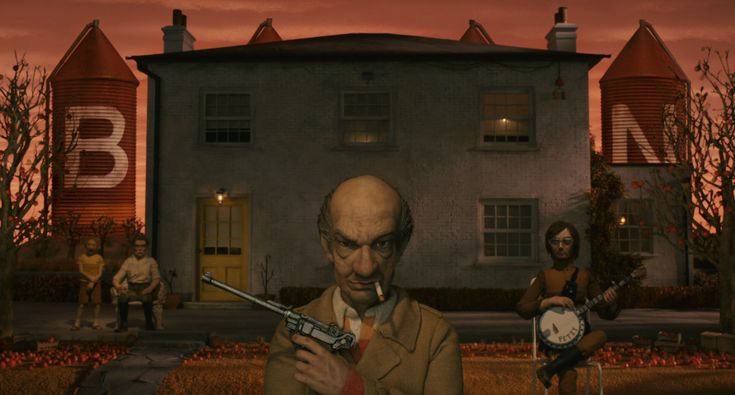
As we only see the human world through the aggressive actions of the farmers it encourages us to see the farmers and the world outside of the fox family’s tree house as negative. The differences between the natural and human worlds are further exhibited in the characteristics that are applied throughout the film. While the animals within the film are anthropomorphised, they still exhibit deeply animalistic and natural tendencies. The close-knit communities they live in are examples of this, alongside the fact they are resourceful, clever, and independent. The Fox family reflect the pull of the natural animalistic instincts of the animals against their desires to live in a domesticated, human-like world. Mr. Fox’s wish to return to stealing food and adventuring, despite his family’s wishes symbolises the underlying wild aggressions of the animals, this is highlighted in the scene where the Fox family escapes the farmers for the first time and Mrs. Fox confronts Mr. Fox.
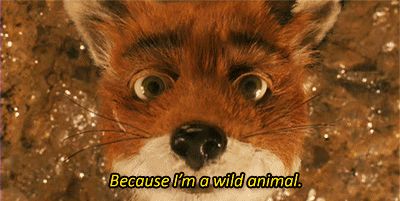
The farmers, however, are depicted as greedy, manipulative, and obsessive. They represent the deterioration of the respect humans have for the natural world. Unlike the animals, the humans are solitary, brutish, and antagonistic, willing to destroy the animals’ homes in pursuit of their desire. The humans are seen as almost dystopian in this sense, their desire for complete control over the animals (no matter how unrealistic) has led them to extreme lengths of mass destruction. Overall, the battle between the animals and the humans is one of the central plot points of the film, which is a struggle that has gone on for years. Anderson’s presentation of the topical struggle is a light-hearted and moving interpretation.

 Ruby Reviews Films
Leave a comment