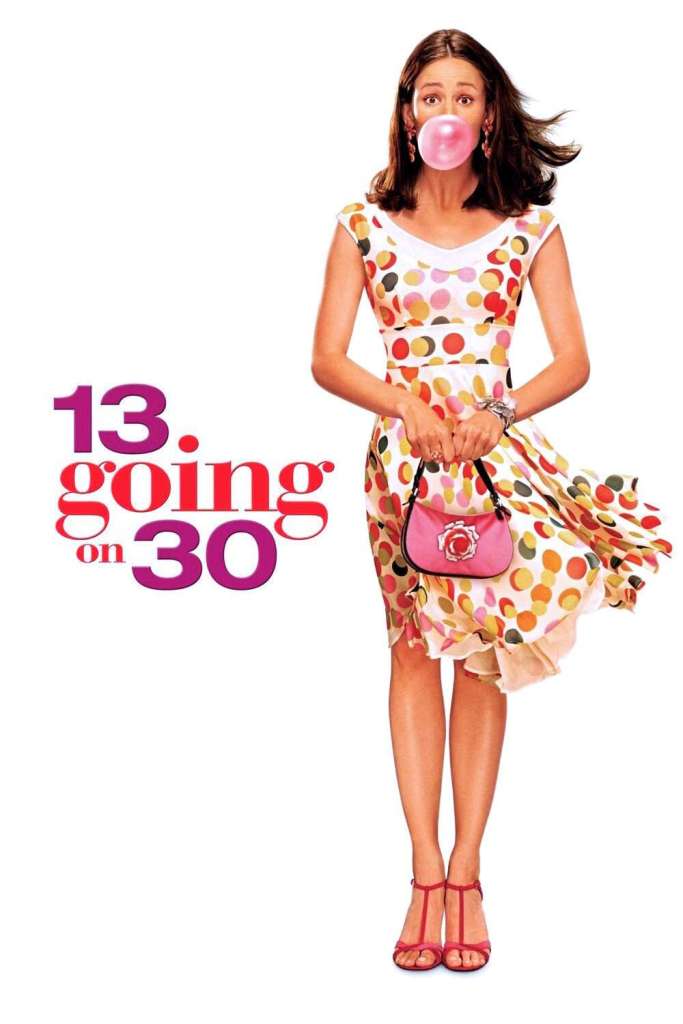
I think this is a film that all children can relate too, everyone wants to be an adult until they actually become adults and realise how tiring life actually is. I remember watching this film for the first time and finding it amazing, I loved every second. Directed by Gary Winick 13 going on 30 tells the story of 13-year-old Jenna Rink magically waking up as her 30-year-old self (played by Jennifer Garner) after she makes her birthday wish. This film beautifully combines the theme of coming-of-age with fantasy and romance, as Jenna navigates adulthood, trying to fix her past mistakes and understand the complexities of her adult life.
Throughout the film many key themes are explored which help the film resonate with audiences of many different ages. Reflecting the struggles of adolescence, complexities of adulthood, and the importance of self-acceptance. Obviously, the transition from childhood to adulthood is a central theme within the film, Jenna magically waking up in the 30-year-old version of her body allows her to start experiencing adult life before she is mentally or emotionally prepared for it. The use of this plot device helps the film explore what it truly means to grow up. Jenna learns important lessons about maturity, relationships, and self-identity. Throughout the film Winick places emphasis on both embracing and learning from ones past to become a more complete person.
The film also plays with the idea of nostalgia and regret, the magic that Jenna gets to experience gives her a chance to see her adult life unfold in ways that she never would’ve expected. As an adult Jenna has made mistakes, lost friendships, and forgotten who she was as a child. Overall, the film asks the question: if we had the chance to revisit our past and make different choices, would we? Jenna’s realisation that she has missed key relationships, especially with her childhood best friend, Matt (played by Mark Ruffalo) is a powerful emotional arc that speaks to the importance of living in the moment and staying connected to one’s true self. In 13 going on 30 Winick is able to create a charming story that not only entertains but also delves into timeless themes of personal growth, the importance of friendship, complexities of adult life, and the beauty of self-acceptance.
The film also holds a special place in pop culture and has had a long lasting cultural significance. At a first glance, the film seems a light-hearted comedy, it explores deeper themes that have resonated with audiences for years. Its influence can be seen in how it reflects and shapes ideas about growing up, relationships, self-identity, and the pressures of adulthood. At the core of the film, 13 going on 30 taps into a universal fantasy, the desire to skip the awkward parts of adolescence and fast forward to the perceived freedom and glamour of adulthood. The premise of the film plays into this fantasy, allowing viewers to reflect on the differences between childhood dreams and adulthood. The film has become a cultural touchstone for people who, like Jenna, may have wished for adult-like freedom without fully understanding the responsibilities that come with it.
Furthermore, 13 going on 30 is often seen as a feminist film in the sense that it challenges the traditional notions of femininity and success. Jenna’s journey is not only about falling in love, but also about discovering her worth in a world that often pressures women to conform to certain ideals. The film critiques the idea of “having it all” and instead emphasises the importance of being authentic to oneself. Jenna’s ultimate lesson is that happiness comes not from external validation, but from understanding one’s own desires, values, and relationships. 13 going on 30 holds significant value not just as a rom com, but as a film that taps into the timeless themes of growing up, self-identity, and the importance of relationships. The exploration of the contrast between childhood dreams and adult reality, combined with memorable performances and nostalgic references, makes it a film that continues to resonate across generations.

 Ruby Reviews Films
Leave a comment