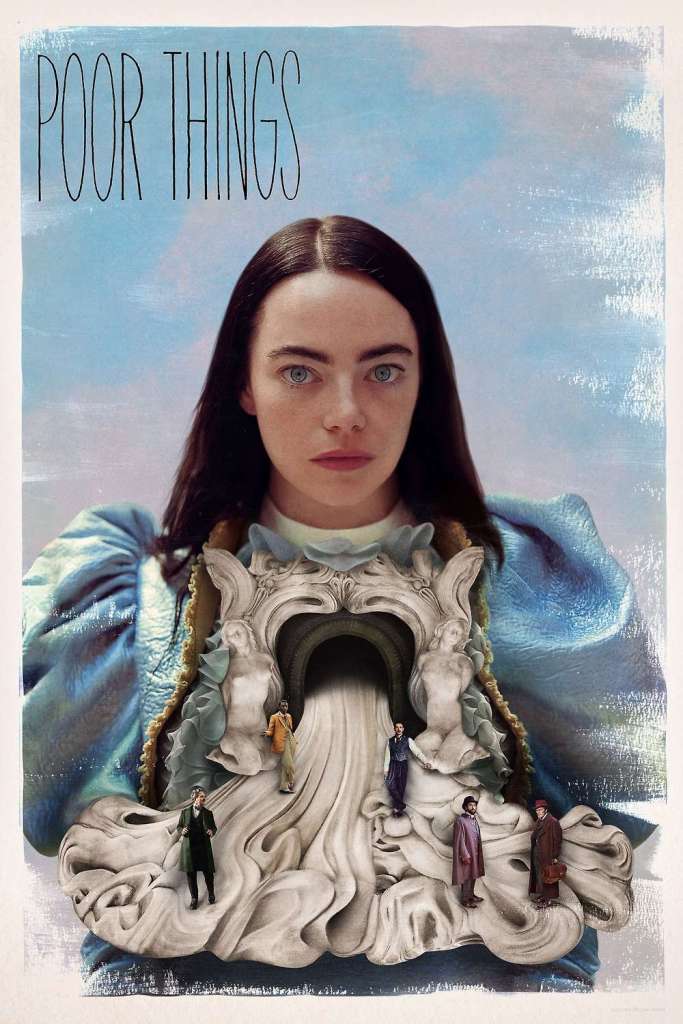
After sneaking into the cinema to watch this as a seventeen-year-old, this film is one that appears utterly bonkers. The film is based on the 1992 novel (of the same name) written by Alasdair Gray. The film follows a darkly comedic and surreal tale about a young woman named Bella Baxter (played by Emma Stone) who is brought back by a brilliant but unorthodox scientist (Willem Dafoe). The film is known for its striking visuals, eccentric storytelling, and a wide variety of themes that are explored, such as identity, mortality, and agency. Given Lathimos’ distinctive style, characterized by dry humour, absurd situations, and a sense of detachment. The film has drawn a lot of attention for its Frankenstein-esque horror and social satire. I can safely and wholeheartedly say I left the cinema feeling a mixture of bewilderment, amazement, and horror.
Poor Things is a visually striking and quirky film that beautifully blends dark comedy, absurdism, and elements of gothic horror. The film explores numerous complex themes, although often with a satirical edge. One of the central themes of Poor Things is Bella Baxter’s journey of self-discovery. As she has been brought back to life as essentially an empty vessel, as she grows and experiences the world, she begins to form her own sense of identity, challenging the expectations of those around her. This theme touches on the idea of who we are outside of social norms, family, and biology. Bella’s quest for selfhood is marked by fierce independence, as she rejects the traditional roles women are supposed to play and instead seeks to define herself on her own terms.
Poor Things satirizes traditional gender roles, and the expectations placed upon women, especially in the Victorian-like setting of the film. Bella, though physically reanimated and having no conventional upbringing, becomes a strong-willed and sexually liberated woman. She offers counterpoint to the traditional female roles of wife, mother, or daughter. In her independence and defiance, Bella’s character critiques the restrictive social roles imposed on women, showing how these structures limit personal growth and autonomy.
The visual aesthetic of Poor Things is a striking and integral component of the film’s overall tone and storytelling. Much like Lanthimos’ previous works, the film uses it’s visuals to amplify the film’s absurdist, darkly comic, and surreal atmosphere. As Poor Things is set in a late 19th-century world, it is reminiscent of Victorian times. The period setting is rich with historical details but is also deeply stylised and exaggerated. The film plays with the conventions of period drama, using costume design, architecture, and props that feel both familiar and otherworldly. It’s a world that’s fantastical rather than strictly realistic, blending historical accuracy with an almost surreal, dreamlike quality.
The visual design echoes the themes of the film, particularly within the idea of reanimation and reconstruction. The architecture of the film often feels somewhat artificial, much like Bella Baxter’s own reanimated body. The film is filled with surreal imagery that defies the conventions of naturalism. Lathimos’ collaborations with cinematographer Robbie Ryan creates striking visual moments where the line between reality and fantasy blur. The camera often lingers on bizarre or exaggerated details, emphasizing the dreamlike, sometimes nightmarish quality of the world. A feature that is particularly notable, is Bella’s reanimated body. Her movements, expressions, and appearance all have exaggerated, almost puppet-like qualities that further distances her from conventional human experience. Her body feels more like an artifice, something both alien and familiar, a perfect visual metaphor for her struggle with autonomy and identity. In this way, the aesthetics reflect the themes of the body as both a vessel for the soul and a site of manipulation or control.

 Ruby Reviews Films
Leave a comment