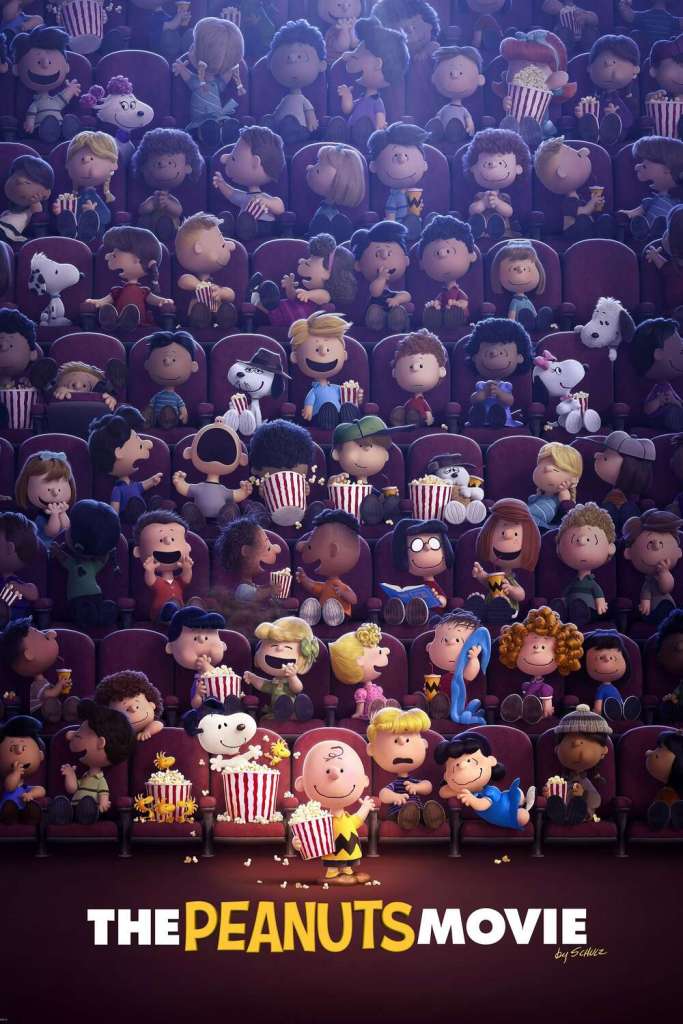
This sweet 3D animated film is based on Charles M. Schulz’s iconic Peanuts comic strip. It’s directed by Steve Martino and produced by Blue Sky Studios. The film centres on Charlie Brown, our lovable yet extraordinarily unlucky protagonist, as he embarks on various adventures, including trying to win the heart of the Little Red-Haired Girl. His dog Snoopy however, is imagining himself as a World War one flying ace in pursuit of the Red Baron. Overall, the film is a perfect blend of classical Peanuts charm with modern animation techniques. Creating a film that is beautifully true to Schulz’s original work while still appealing to new generations of Snoopy fans.
The Peanuts Movie blends humour, nostalgia, and heartfelt moments to explore the universal experiences of growing up, facing insecurities, and finding one’s place in the world. A core theme within The Peanuts Movie is Charlie Brown’s ongoing struggle with self-doubt. He constantly feels overshadowed by his more confident friends, like Linus and Lucy, and strongly believes he is incapable of doing anything right. This theme resonates strongly throughout the film, as Charlie Brown tries, fails, and tries again. Ultimately, his journey is one of self-acceptance, learning that his value doesn’t come from his external achievements, but instead from inner strength and kindness. By the end of the film, Charlie Brown makes the realisation that he doesn’t have to be perfect to deserve happiness and love. Another core theme within the film is the friendship shared by Snoopy and Charlie Brown. Despite Snoopy’s whimsical adventures he is always there for Charlie Brown, offering comfort and support when needed. Charlie Brown, despite the insecurities he might have always treats his friends with the kindness and respect he feels they deserve, even though they may not treat him the way he might wish. The film emphasises the importance of loyal friendships that aren’t based on perfection, but instead focus on unconditional support and care for one another.
Another key aspect of The Peanuts Movie is the fact it beautifully honours the original Peanuts legacy and brings the beloved characters to a new generation. Although the film is made with a stunning new animation style, it also focuses on celebrating the core values that have made the Peanuts characters so beloved for decades. The film maintains the simplicity, innocence, and charm that originally made Charles M. Schulz’s Peanut’s comic a cultural touchstone. The film’s visual approach, although different, is faithful to the original style of the comics. Highlighting the rounder character designs and the muted, pastel colours, helping to further mimic the look of the classic Peanuts specials and strips. Furthermore, the film incorporates the signature humour of the Peanuts gang, with dry, self-deprecating wit being one of the main elements of this. There is still underlying sweetness to the humour, even when the characters are struggling with life’s little challenges, like Charlie Brown’s endless bad luck or Lucy’s bossy nature. Thankfully, the film makes no effort to reinvent the characters, simply choosing to update them while staying true to their original personalities and dynamics. Another major part of The Peanuts Movie is Charlie Brown’s battle with insecurity and his repeated failures. As these are common factors in childhood, and indeed throughout life it creates a sense of familiarity. Whether it’s trying to impress the Little Red-Haired Girl or trying to live up to the expectations of others, Charlie Brown’s challenges are deeply relatable. As throughout the film Charlie Brown repeatedly tries and fails, yet the film reinforces the idea that trying is what matters the most. Although this message is undoubtedly simple, it is on that has spanned over generations. It teaches that effort, sincerity, and perseverance are more important than achieving perfection or recognition. This is an incredibly important lesson for children, but also a reminder for adults that it’s okay not to always succeed as long as you try your best.

 Ruby Reviews Films
Leave a comment