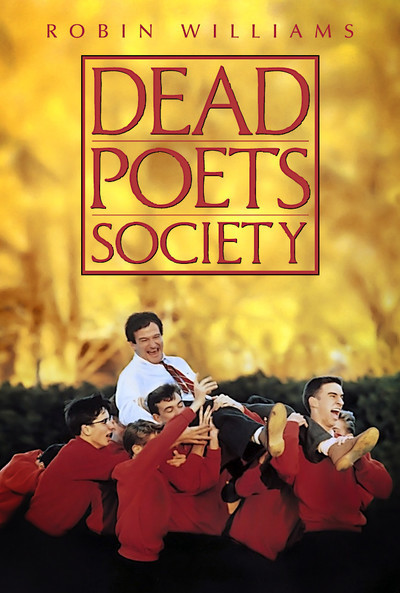
This film is one that is a perfect mix of heart-breaking and heart-warming, directed by Peter Weir in 1989, The Dead Poets Society is able to perfectly highlight the struggle found within trying to fit into what society wants and expects from you Vs. what you wish to discover for yourself through following ones own path. This may be highlighted as a key theme due to the historical context of the Revolutions of 1989 (also known as the fall of communism). As this drastically altered the world’s balance of power it can be suggested that the fear of individuality can also be attributed to this.
Throughout the film we are constantly reminded of the theme of death, within both literal and symbolic forms. The film tackles the fragility of life, pressure of societal expectations upon us, and the constraints placed upon us by family, traditions, and authority. The character where these constraints can be seen the clearest are upon Neil Perry (played by Robert Sean Leonard). The journey Neil embarks on highlights the destructive reality of societal expectations and crushing parental control. Overall, his character represents the struggle between personal dreams and the defeating weight of external pressures, ultimately leading to a devastating ending. Neil’s death is foreshadowed in many ways throughout the film. Beginning when Keating takes the boys to see the portraits of ex-students. As Keating informs the boys about the hopes and dreams many of these former students had high hopes for, he depressingly ends this by stating they are now nothing more than ‘worm food’. While many of the dead poets group is shown during this monologue, it is Neil we see last, just as Keating delivers the line ‘worm food’ foreshadowing what will become of Neil, alongside ultimately capturing his short future perfectly. Furthermore, the theme of Carpe Diem is closely tied to Neil’s death. Neil’s passion for acting is first ignited when Keating encourages the boys to pursue their dreams (seize the day). This philosophy gives Neil the strength to defy his Father’s strict control and pursue his desires. But despite his courageous actions Neil’s story still has a tragic ending. His short-lived pursuit of acting represents his attempt to live fully and authentically, to seize the chances given to him in life no matter how little time given to enjoy them.
Later in the film Knox states that if he cannot have Chris then he will kill himself in desperation and sadness for his unrequited love. While this line is delivered there is shot reverse shot of Todd (played by Ethan Hawke) beside Neil. The proximities of the two characters places them within the idea of naivety as they are unaware of what is to come later. Knox then says later on “Carpe diem, even if it kills me” when calling Chris to confess his feelings. This encourages the audience to compare Neil and Todd to the budding relationship shared by Knox and Chris. Overall, this encourages the audience to view this interaction as romantic whilst also subtly making the audience aware of what is to come later. Todd is the ‘Carpe Diem’ to Neil’s ‘even if it kills me’. Which is precisely what happened to Neil. It is his Carpe Diem that eventually kills him. But he died knowing he was great. He was good, he was really good. This being the final thing Neil says perfectly encapsulates his life and paints a heart-breaking scene for the audience.

 Ruby Reviews Films
Leave a comment