A scene where the use of mise-en-scene can be highlighted as especially evocative within Carrie’s closet. Although it is a clear theme throughout the film the theme of religion is particularly clear here. The overhead shot of Carrie banging on the door helps establish her situation and furthermore shows how small the area is, this creates alignment between Carrie and the audience and ultimately fashions a sense of pity for Carrie. The use of dominant contrast insures that the audience’s attention is first centred on the bible sitting on the shelf next to Carrie, this reinforces the biblical nature of her life. Furthermore, the interaction that has just occurred between Carrie and her mother helps reinforce the placement of religion within the film. The idea of religion is further called upon through the use of subsidiary contrast. The second thing audiences eyes are drawn to is the biblical statue of Sebastian. When this statue is first seen it can automatically be assumed the statue is Jesus, considering Carrie’s mothers pious intentions this is easy to assume. As Carrie’s mother is portrayed as such a religious fanatic it is hard to believe the use of Sebastian instead of Jesus is a mistake. Although the foreshadowing becomes clear by the end of the film, Carrie’s mother is dead, and the positioning of her corpse is identical to that of Sebastian. Perhaps the Sebastian statue was also Carrie’s mother’s way of telling her that she wasn’t Christian enough, that she wasn’t a good enough daughter.
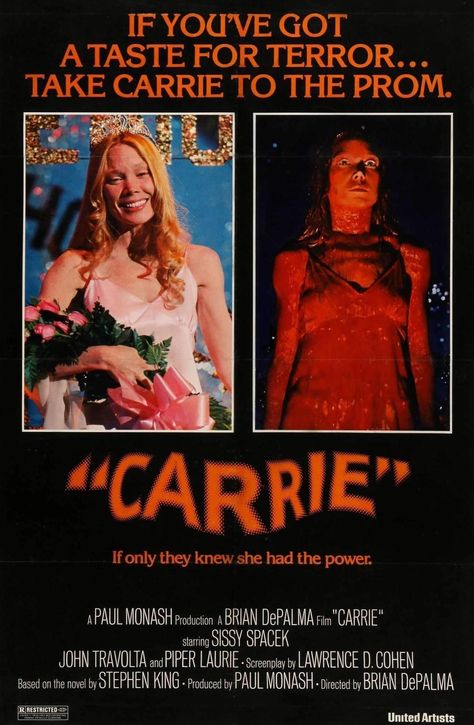
Sissy Spacek’s performance of Carrie cannot be called anything short of mesmerising. The transformation the character goes on as the film progresses highlights the control Spacek has over her body. At the beginning of the film Spacek is huddled in the corner of the gym, looking nothing short of pathetic. By letting her long hair hank lank in her face Spacek effectively makes herself appear faceless and it is through her body language the audience is able to decode her body language, Spacek’s lack of eye contact further conveys her timidness. In Spacek’s Screen Test she went above and beyond, leaving herself unwashed and putting Vaseline in her hair to make it seem extremely unwashed, she also wore a dress her mother made her when younger, all this helped her secure the role. Spacek’s performance after her telekinetic powers emerge is immediate contrast. She plays Carrie as commanding and powerful, the physical transformation Spacek goes under highlights her determination to free herself from beneath her mother’s thumb (played by Piper Laurie) alongside her desire to get revenge on her classmates for the trauma they put her through.
De Palma’s use of split diopter is incredibly effective throughout the film, within the prom scene allowing audiences to witness multiple perspectives ultimately heightens the tension as the events unfold alongside successfully capturing the visceral buildup to the resulting disaster and to Carrie’s emotional explosion. Furthermore, the use of slow motion within the prom scene helps amplify the horror and distress of the scene. The use of slow motion helps amplify the rapid changing of Spacek’s emotions as she quickly goes from joy to shock. The use of this technique helps audience fully take in the severity of the scene. De Palma’s use of colour within this scene is also incredibly symbolic as the room goes from lowkey lighting to being entirely shrouded in red it represents Carrie’s pain alongside signifying the danger her classmates are now in. Before this sequence, De Palma’s use of symbolic framing is immensely effective, as closeups of Carrie are frequently used it highlights the themes of entrapment. While the use of wide shot effectively isolates Carrie within the frame, making it clear she has no friends.
The use of sound is highly emotive throughout the film, Pino Donaggio’s score creates alignment between the audience and Carrie through the haunting melodies and unsettling compositions. This effectively reflects Carrie’s inner turmoil and the horror that escalates throughout the film. The use of such a haunting score heightens tension in an immensely effective way. Specifically, during the prom scene, the non-diegetic sound heightens the sense of impending doom. De Palma’s use of non-diegetic sound effects is crucial to the eerie feeling left on the film, the overlaid sound of her mother’s torments when the pigs blood is poured on Carrie is particularly evocative; creating a sense of pity alongside implying the high amounts of trauma left on Carrie due to the experiences she faces. Although the use of sound is effective and emotional, the silent moments in the film are equally emotive, the silence before key events helps create a build up alongside allowing the audience to feel and appreciate the building tragedy.

 Ruby Reviews Films
Leave a comment