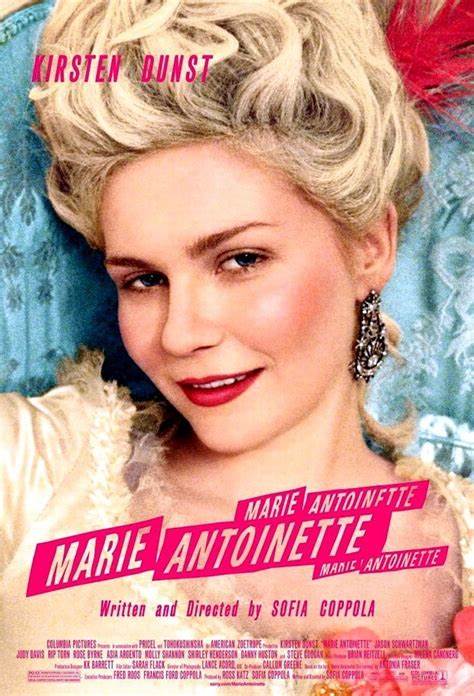
Sofia Coppola’s signature and whimsical style clearly shines through again in Marie Antoinette (2006) the removal of stereotypical rigid historical storytelling allows a dreamlike and fanciful reinterpretation. This film is particularly well known for blending 18th-century French history with modern music and fashion. The soundtrack (containing music from The Stokes and Siouxsie and the Banshees providing a contemporary feel to the historical narrative.
The film itself is unique as it portrays Marie Antoinette (played by Kirsten Dunst) as a misunderstood figure who is burdened by the harsh constraints of royalty and the role history has forced upon her. Coppola is able to emphasise her youth and innocence, highlighting her personal desires for freedom amongst such harsh rules. Dunst is able to portray Marie Antoinette’s youth and naivety through the fluidity of her performance, easily capturing the awkwardness and vulnerability of a young girl so far from home. Dunst’s wide emotional range further adds to her performance alongside Coppola’s portrayal of Marie Antoinette. There is a wide range of emotions displayed throughout the entirety of the film and as they develop throughout it highlights Dunst’s wide range. At the beginning of the film there is initial excitement paired with the hopefulness of marriage showcasing Dunst’s performance as fluid and emotive creating alignment between the audience and the actor. Later in the film as Dunst’s performance changes highlighting how she feels while navigating her role as queen. The frustration, confusion and sorrow showcased is prime example of this, Dunst is able to effectively showcase Marie Antoinette’s internal worries as she struggles between choosing to be an obedient royal figure and wanting to break free from the constraints placed upon her. Overall, critics have praised Dunst for brining a sympathetic and multifaced portrayal to a figure often vilified in popular history. Most importantly, her ability to humanize Marie Antoinette (usually remembered for lavish lifestyle and execution) was a point of distinction in the film, this allowed Dunst to challenge the stereotypical representation of the queen and instead highlight her as someone struggling with the weight of her position.
The soundtrack created for this film is integral to the film’s unique style and tone, it helps the audience see the vision Coppola has crafted for Marie Antoinette’s life through the blending of historical settings with a modern sensibility. The sound plays a key part in conveying the emotional and psychological experience of the central character alongside establishing a sense of comparison between the immensely different time periods. The soundtrack itself is one of the most striking elements of the film’s sound. Coppola’s use of modern, eclectic mix of rock, electronic, and new wave music from the 1970’s and 80’s helps highlight the emotional experience of Marie Antoinette, while drawing particular attention to her youthful energy and internal rebellion, whilst further underlining the alienation she feels within the rigid confines of court life. Some of the songs Coppola chose are: “I Want Candy” by Bow Wow Wow, “Hong Kong Garden” by Siouxsie and the Banshees, and “Ceremony” by New Order. The specific music chosen often serves to juxtapose the opulence of Versailles and create a sense of rebellion and youthful disillusionment. This effectively transforms the film into a historical fantasia. By aligning the music with the emotional states of Marie Antoinette it creates a sense of alignment giving insight into her loneliness, boredom and the growing sense of entrapment, alongside further giving the film a timeless, dreamlike atmosphere. In comparison to Coppola’s use of sound her use of silence is equally effective. The absence of sound helps effectively and strategically amplify the emotional isolation. Throughout the film there are specific moments where the film lingers on long, quiet stretches where diegetic sounds such as footsteps or rustling leaves are able to punctuate the otherwise silent atmosphere. Furthermore, these moments highlight Marie Antoinette’s extreme loneliness.
The aesthetic Coppola puts forth is one that helps solidify her position of auteur. The blurring of historical opulence, modern sensibility, and dreamlike fantasy successfully all come together to create a highly stylized and almost surreal portrait of life as a royal in 18th-centry France. Coppola’s aesthetic vision embraces a contemporary approach that merges the visual language of the 18th-century France with modern elements such as music, fashion, and design. The colour palette of Marie Antoinette is rich and vibrant, although dominated by beautiful pastel shades like pinks, lavenders, and mint greens evoking a sense of fragility, femininity and youthfulness. These lighter colours are paired with richer tones such as gold, deep red, and royal blues reflecting the grandeur and opulence of the French court. Furthermore, the costumes are a key element in shaping the film’s aesthetic (designed by Milena Canonero) the costumes display a beautiful blend of historical accuracy and fashion-forward modernity, creating a look that is both historically inspired and visually stunning. The film’s showcasing of extravagant period costumes with particular focus on the famous pouf hairstyles, elaborate gowns, and corsets that were representative of the height of 18th-century French fashion. Marie Antionette’s dresses are adorned with lace, embroidery, and ribbons emphasizing her status as queen of France. The lavish costumes highlight the luxury of royal life but also the construction that comes with it. Canonero’s designs successfully incorporate elements that allow the outfits to feel more contemporary, the use of high-fashion silhouettes and bold accessories that evoke a feeling of modern luxury. Furthermore, the use of pastel colours (specifically in Marie Antoinette’s wardrobe) speaks to a more modern fashion era, the use of iconic footwear (converse) and minimalist accessories further tie the costumes to a contemporary sensibility and further contributing to the feeling of a timeless, dreamlike world where the historical and modern world coexist.

 Ruby Reviews Films
Leave a comment